THE NEIGHBOURHOODS
In the “Historia della chiesa di Monreale” (History of the Church of Monreale), published in 1596, we read that Monreale was divided into four parts: the first and oldest, the Pozzillo, took its name from the water that flowed in a fountain located undet the street level, so low that it looks like half a well… in this neighbourhood you can see tapia houses, and he deduced that they had been built by the Saracens: tapia was the name given to the large unfired clay bricks used by the Arabs, and it certainly speaks in favour of their robustness; at the end of the 16th century those houses were still standing.
It seems, therefore, that the oldest nucleus of the settlement developed around the source of the Pozzillo, and then spread out on two sides: towards the cathedral and along the road from Palermo leading to the interior of Sicily.
The Carrubbella is one of the most ancient neighbourhoods of Monreale along with San Vito and Pozzillo. Its name derives from the carob tree which was used by the carpenters and the artisans who lived there. They took the wood from the carob tree and used it to build ships and furnitures. We learn that the seeds of this plant, very hard and oval in shape, were once used as weights for gold, silver and precious stones.
The neighbourhood is divided into an old area with low houses, sloping roofs and small windows and a recent area with modern settlements and buildings with courtyards, alleys, arches, stairways and some votive aedicules.
At the beginning the Carmine neighbourhood, whose name comes from the Hebrew word “Karmel” meaning “garden”, was actually a large garden. It is considered the only neighbourhood of Monreale to have a geometric design since it is configured in axes.
In 1624 the nearby Palermo was struck by a terrible plague. The Archbishop Girolamo Venero isolated the town with a wall on which six symmetrically arranged gates opened. The four neighbourhoods were divided into districts, the settlement expanded into the Court’s Garden (the original name of this neighbourhood) owned by the archbishops, which became the fifth neighbourhood named Carmine (it’s named after the Palestinian Mount Carmel). In 1560, archbishop Alessandro Farnese decided to build a church with an adjoining cloister and a convent , later administered by the Carmelite order.
The Carmine neighbourhood hosts the residencies of the Archbishops. It was composed by the districts of Arancio, Odigitria, Orto Mangano, Varanni, the barters, the slaughterhouse, the prisons, sant’Orsola and Gibbiuni.
It was a neighbourhood rich in water and public fountains, composed by humble residencies, where landowners, agricultural labourers and small livestock breeders lived.
The most important street of the neighbourhood, “A Varanni” or “Via Grande”, was planned at the beginning of the 16th century: the road, wide and flat, was also to be used for horse races during festivities. At the end of the current Via Duca degli Abruzzi, once called A calati ri jenchi (heifers), there was the slaughterhouse.
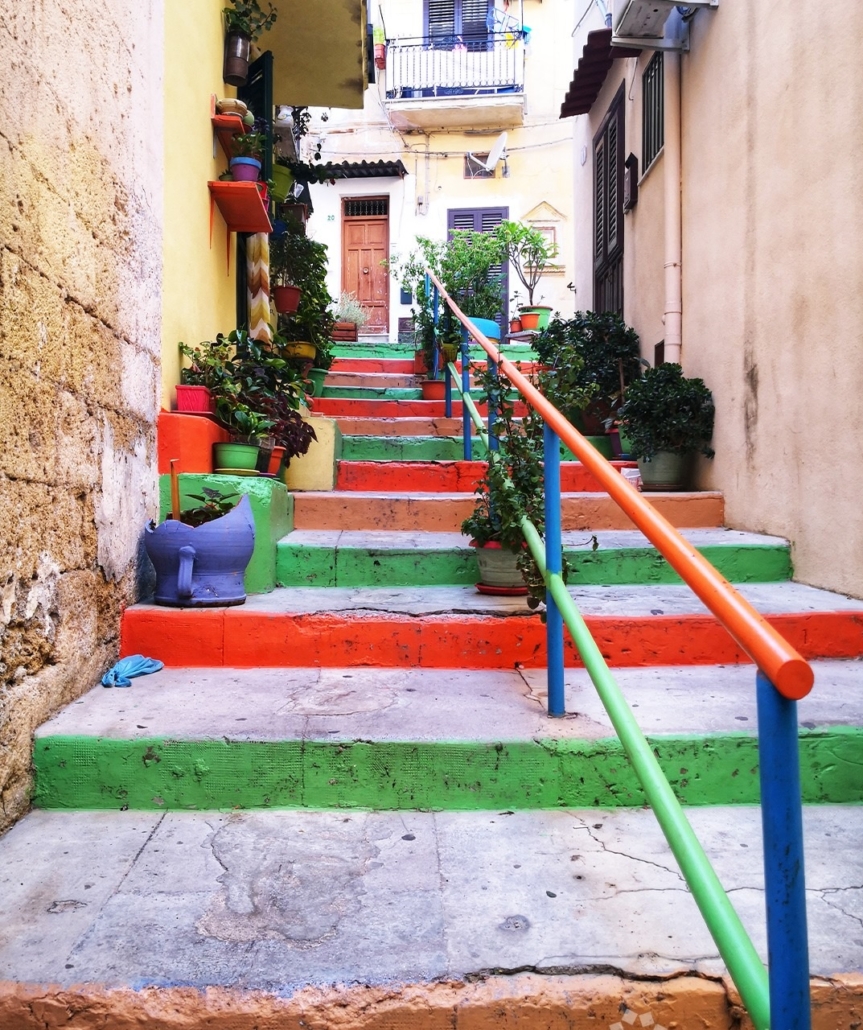
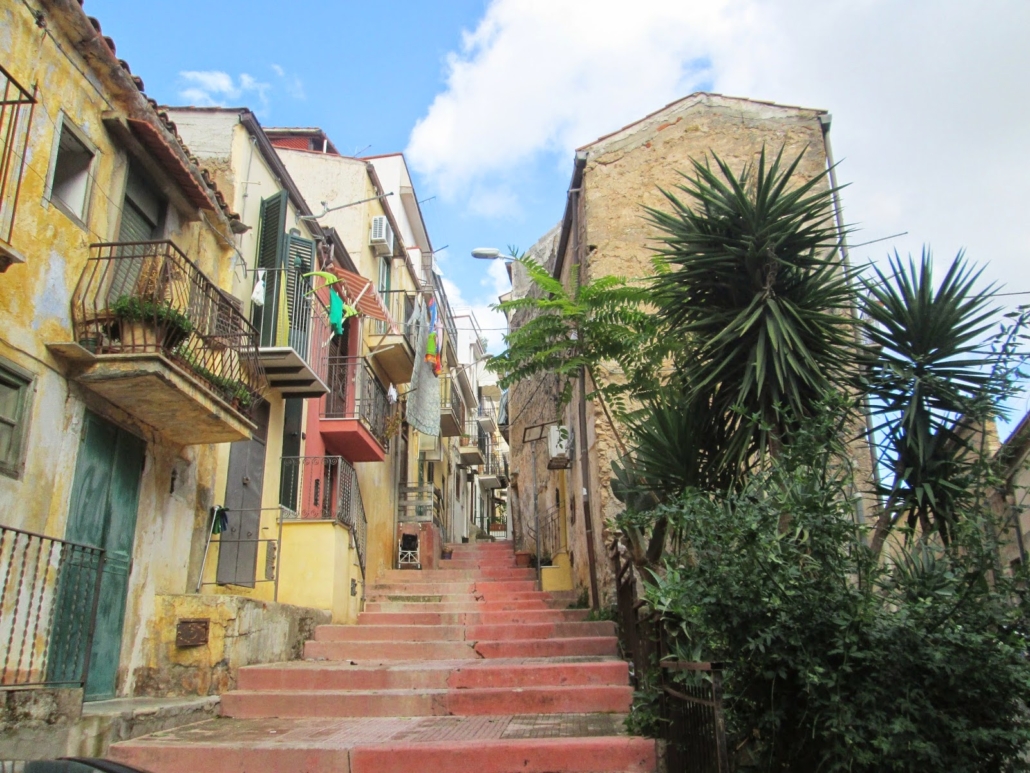
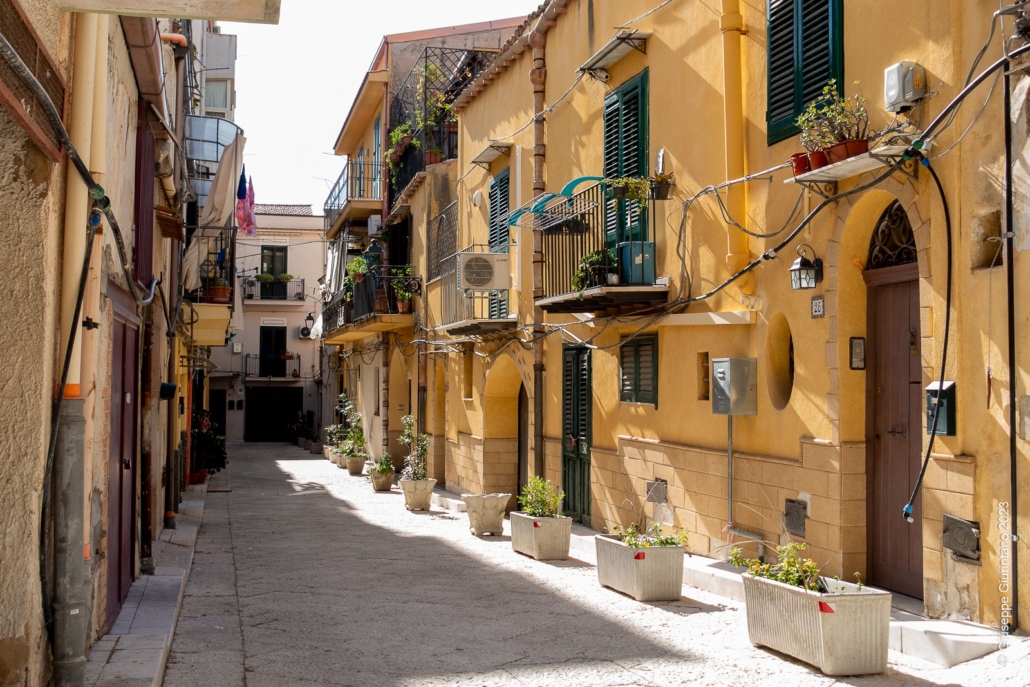

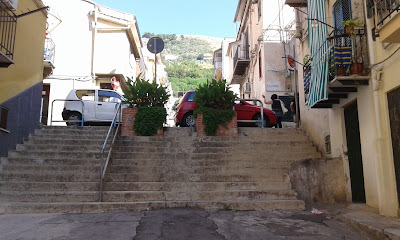
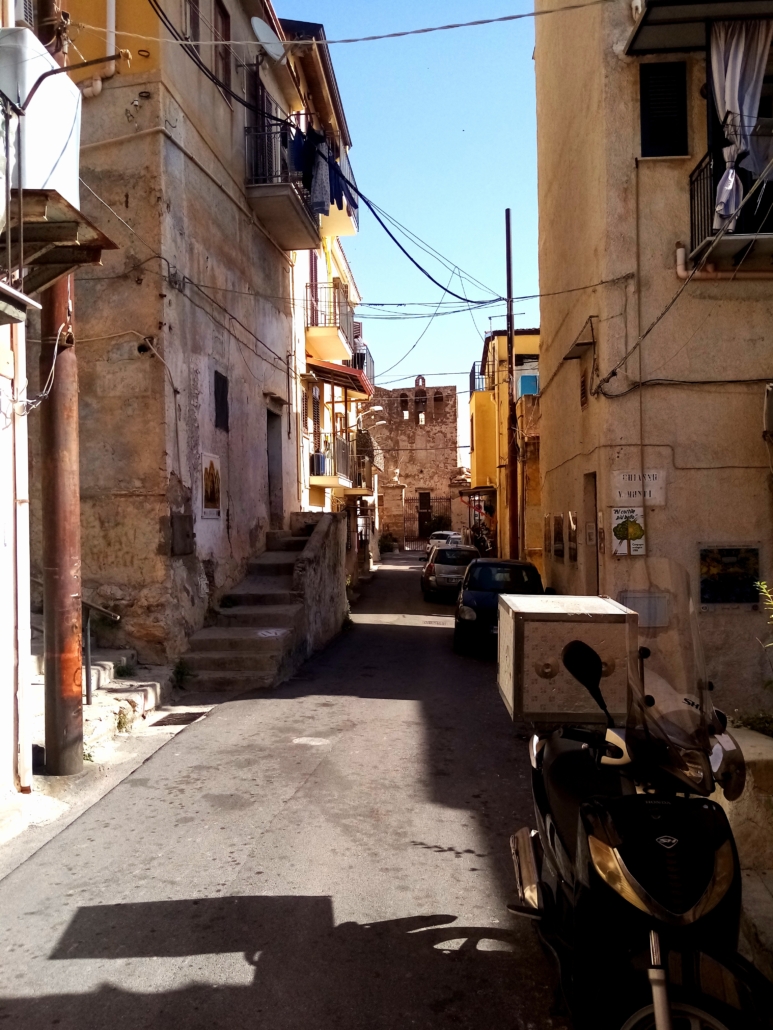
The Ciambra was a citadel on the military bastion, a defensive outpost. Today, a stone’s throw from the Dome and almost an appendage to it, it is the neighbourhood where tourists can rediscover Monreale’s medieval roots more easily.
The name of this neighbourhood derives from the French word “chambre” because here there were the rooms of the Crown’s Palace at the time of the Angevin domination in Sicily. The ancient neighbourhood, built on the characteristic rock outcrop which from behind the of the Cathedral of Monreale looks towards Palermo, rose during the years of the construction of the cathedral, and it was inhabited by the king’s servants and the workers engaged in building the great temple dedicated to the Virgin Mary: the tangle of cobbled lanes, the characteristic passageways and arches, every detail takes us back to the Middle Ages. And it is nice to get lost in this neighbourhood with the flowering plants in front of the door and the shops on the corner: there are mosaic workshops and small craft and design shops that believe in sustainable development linked to manual labour and the territory.
Constitued by an ensemble of narrow alleyways and small open spaces, inside the Ciambra is the archiepiscopal palace, built between 1418 and 1449 by Archbishop Giovanni Ventimiglia; at the foot of the abbey complex in 1581, the Capuchin fathers’ convent was built at the behest of Ludwig I Torres. Cutò Palace dates back to the second half of the 17th century, with its characteristic baroque portal in tuff and continuous battlements, once the residence of Alessandro Mastrogiovanni Tasca, first prince of Cutò: the back of the palace has a balcony overlooking the Conca d’Oro, offering a breathtaking view.
The Bavera neighbourhood is developed in the highest part of the village along with Saint Vitus neighbourhood. It is composed by narrow alleyways, some of them pending, and it was isolated by the rest of the village. The name “Turbe” derives from the word “turbulence” and the name “Bavera” derives from the fact that this neighbourhood was anciently inhabited by the tax collectors, at that time as known as Bavarians.
The San Vito neighbourhood is developed in the highest part of the village along with Bavera neighbourhood. It is one of the most ancient neighbourhoods of Monreale along with the neighbourhoods of Pozzillo and Carrubella. It can maybe be considered the most ancient neighbourhood of Monreale because the Arab merchants who sold their goods and fruits in Palermo came from this neighbourhood, known as Balhara at the time of the Islamic domination in Sicily. It is composed by narrow alleyways and retain a Medieval layout.
The neighbourhoods of Ciambra, Pozzillo, Bavera and San Vito coincide with the oldest part of the village and retain a medieval layout.
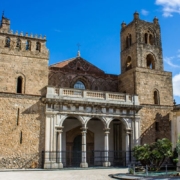
The Dome of Monreale is an architectural marvel of Romanesque-Latin-Norman-Byzantine style: it is simple, majestic and severe. It shows off a great profusion of wealth, with mosaics on a gold background surrounding the internal of the Dome for more than six thousand square meters…
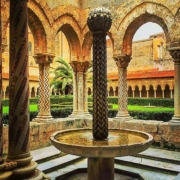
The Benedictine Cloister was part of the monastery and is one of the most important cloisters of all the Mediterranean area. It’s the heart of the entire Abbey Complex and It is a wonderful example of Byzantine architecture in Sicily…
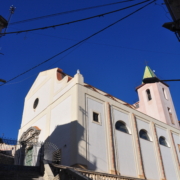
At the end of the 16th century, in Monreale’s neighbourhoods citizens started building many churches and chapels in order to express their religious devotion and show their charitable commitment to God, emphasizing their sense of brotherhood. Those buildings use the Baroque architectural canons…
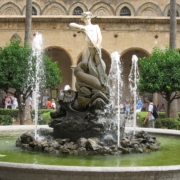
Being a town built on the slopes of Mount Caputo, fountains are essential. The lower part of Monreale benefits from the water taken from the Oreto river, but at the same time has no water sources in its upper part. An archbishop in the 1700s decided to solve the problem by building an aqueduct to bring water to the homes of inhabitants of Monreale…
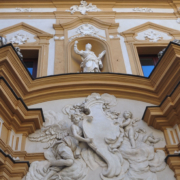
The first core of the library “Santa Maria La Nuova” dates back to the arrival of the monks who received many privileges from king William: among other things, the abbot was elevated to the rank of archbishop and the abbey had “libris et sacris vestibus argento et auro”…