MONREALE AND THE ARCHBISHOPS
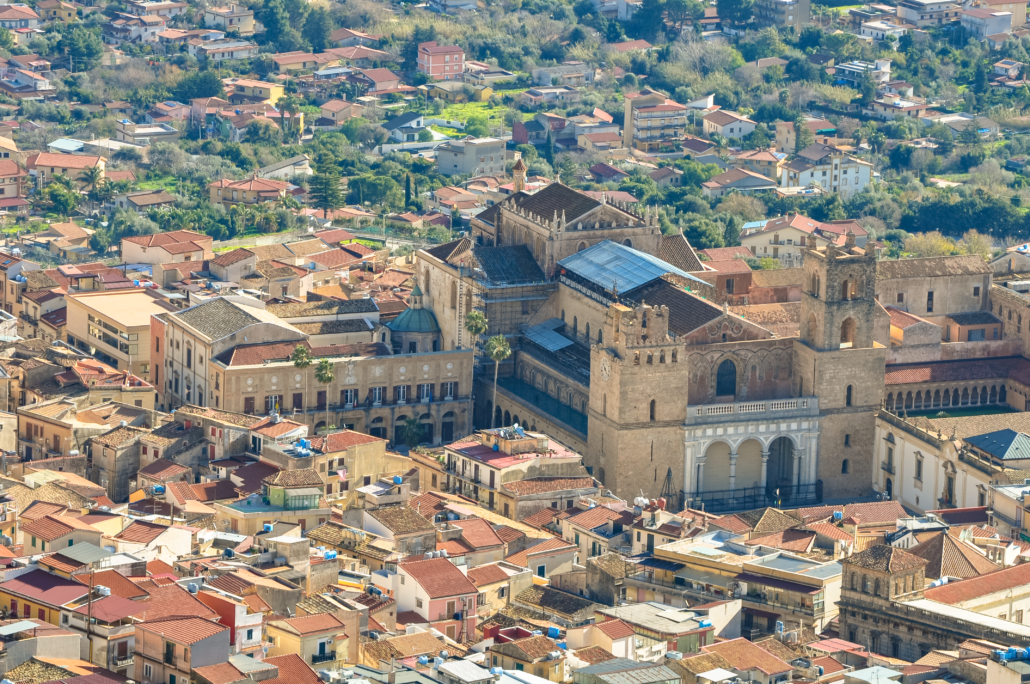
With the arrival of the Normans, Sicily became a Christian land again, but tensions soon began between the not strong enough sovereign and the too powerful barons. Two parties were created. The king leans towards the pope, the other front is formed by the barons and the archbishop of Palermo Gualterio Offamilio: the outcome of the clash became visible a few miles from the capital, where an imposing architectural complex dedicated to Our Lady was built. The new abbey possessed a vast land, and Benedictines from Cava dei Tirreni were called to officiate at its rites: since there were only woods, countryside and Muslim settlements around, the king attracted men from other regions to populate the newly founded city and defend it. The miracle of building is soon accomplished, in just a few years Byzantine, Arab and Latin craftsmen created one of the highest examples of the art known as ‘Arab-Norman’. In 1183 Pope Lucius III granted the cathedral of Monreale the status of metropolitan church.
Monreale was the most powerful among Sicilian ecclesiastical lordships, a privilege given in 1182 by the royal chancellery in three languages – Latin, Greek and Arabic – defining its territory and declaring the abbey “the mistress” of 72 fiefdoms: although much of the land was in the hands of the Saracens, and only after a long internal crusade and a slow repopulation, the normans could finally collect rents and give rights.
Surrounded by walls with 12 alternating towers, the abbey is a fortified citadel. More than the Cluniac abbey models, its structure could be compared to the mosques of Islamic cities: from the apses facing East to the architecture of the cloister, the cathedral of Monreale tells us of a multi-ethnic but not pacified Sicily, where Latin elements slowly ended up prevailing.
Thanks to the prestige of the cathedral and the richness of its archiepiscopal office, especially during the first centuries, the diocese of Monreale was administered throughout history by different archbishops belonging to the most important families of Christianity. Some archbishops have left very evident marks in the territory, three of whom stand out:
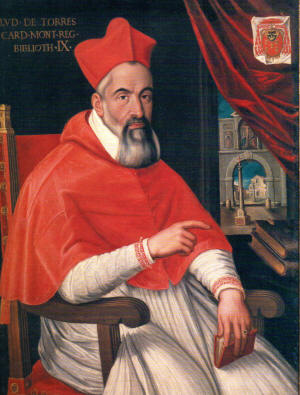
Ludwig II Torres: Archbishop of Monreale from 1588 to 1609, he succeeded his uncle of the same name. A patron and friend of many literary men, he was one of the most important protagonists of the Catholic Reformation, embodying its ideals by regulating the religious life of the diocese. He founded the archiepiscopal seminary and restored the floor layout of the cathedral’s aisles, on which he stamped his coat of arms, composed of five towers arranged in a chessboard pattern. Many of his numerous artistic commissions are now housed in the Diocesan Museum.
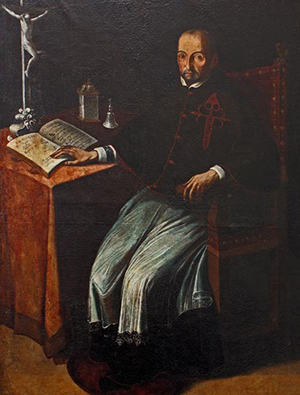
Girolamo Venero: Archbishop of Monreale from 1620 to 1628. In order to protect the town from the plague that was claiming numerous victims in the nearby capital, in 1624 he delimited the inhabited centre with a fortified wall with six symmetrically arranged gates. The four quarters were divided into contrade (districts) and the settlement expanded into the Giardino della Corte owned by the archbishops, which became the fifth quarter called Carmine. He ordered the construction of the Collegiate Church.
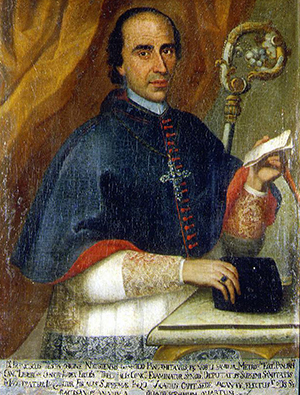
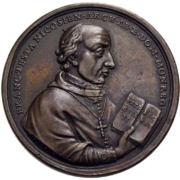
Francesco Testa: Archbishop of Monreale and Supreme Inquisitor of Sicily from 1754 to 1773. During his rule, Monreale had a population of just under 9,000 inhabitants and was a city-convent all organised around 22 churches, monasteries, conservatories of virgins and congregations. During the almost twenty years of his rule, the archbishop-abbot changed the face of the town with intense urban-architectural works, the most important being the construction of the road-monument, adorned with fountains built by Ignazio Marabitti, connecting Monreale to the capital Palermo. Many of his numerous artistic commissions are now in the Diocesan Museum.
The “stradone di Mezzomonreale” was laid out in 1583 by Viceroy Marcantonio Colonna, who had thus extended the axis of the Cassaro to the village of the Rocca, at the foot of Monreale, making it also the first tree-lined public road…
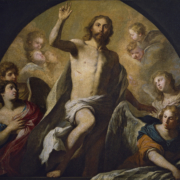
The history of Monreale is intertwined with that of two famous Monrealeses: the poet Antonio Veneziano and the painter Pietro Novelli…