
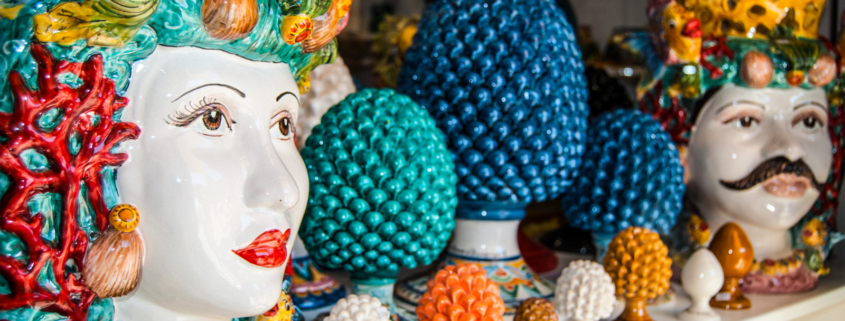
CERAMICS IN MONREALE
CERAMICS IN MONREALE
The art of ceramics, just like the art of mosaics, is one of the strongest artistic suit that stand out most in Monreale and its territory.
Monreale, by virtue of its long-lived historical tradition and its deep-rooted handicraft production fabric in the ceramic sector, is one of the 46 cities in the Italian territory that can boast recognition as a “City of ancient and established ceramic tradition.” An ancient art that sinks its roots in the 16th century, thanks to the school of artists founded by Masi Oddo, something that still receives luster today thanks to the magnificent achievements accomplished by the town’s master craftsmen.
Our soil is rich in materials suited to be processed in order to craft splendid artifacts. One of the oldest and most widespread materials is definitely clay: an extremely fine unlithified sediment that, with the addition of other elements, can be completely transformed into a real object. It is from this sediment that the art of pottery, a material with an ancient history and many different kinds of uses, comes to life.
The origin of this art is already clear from an etymological analysis of the word “ceramics.” The latter is in fact derived from the Greek “kéramos”, the meaning of which is “clay” or “potter’s earth.” The art of pottery was in fact guarded by those who made pottery: they would start with clay, add water to it, and work this mixture by shaping it until the desired shape was obtained. In the last stage, the artifact was cooked.
History of Ceramics
The earliest pottery finds have occurred in the East-Japan, the Middle East to present-day Turkey. Pottery was discovered by our ancestors as a result of observing the hardening of beaten earth, heated up by the action of fire.
Pottery culture spread to Sicily from the sixth millennium B.C. onward. The geographical location of the island has always favored domination, being the object of conquest by the most important civilizations. Phoenicians, Greeks, Romans and then again Normans, Swabians, Aragonese, Spanish, Bourbons, all the way up to the Kingdom of Italy and the autonomy of the island. A millennia-long history in which Sicily has always been a welcoming land, a crossroads of different peoples and cultures. But despite the different dominations, Sicily has always expressed its own character in the production of ceramics.
A strong impetus to the art of ceramics in Sicily can certainly be attributed to the introduction of the lead glazing technique by the Arabs. Pottery glazing was in fact a technique coming from Persia, Syria, and Egypt and consisted of a mixture of substances sprinkled on the ceramic body, which is then vitrified in firing. The key element is silicon, which, by fusing at high temperature with other substances, gives color and waterproofing characteristics to the pottery.
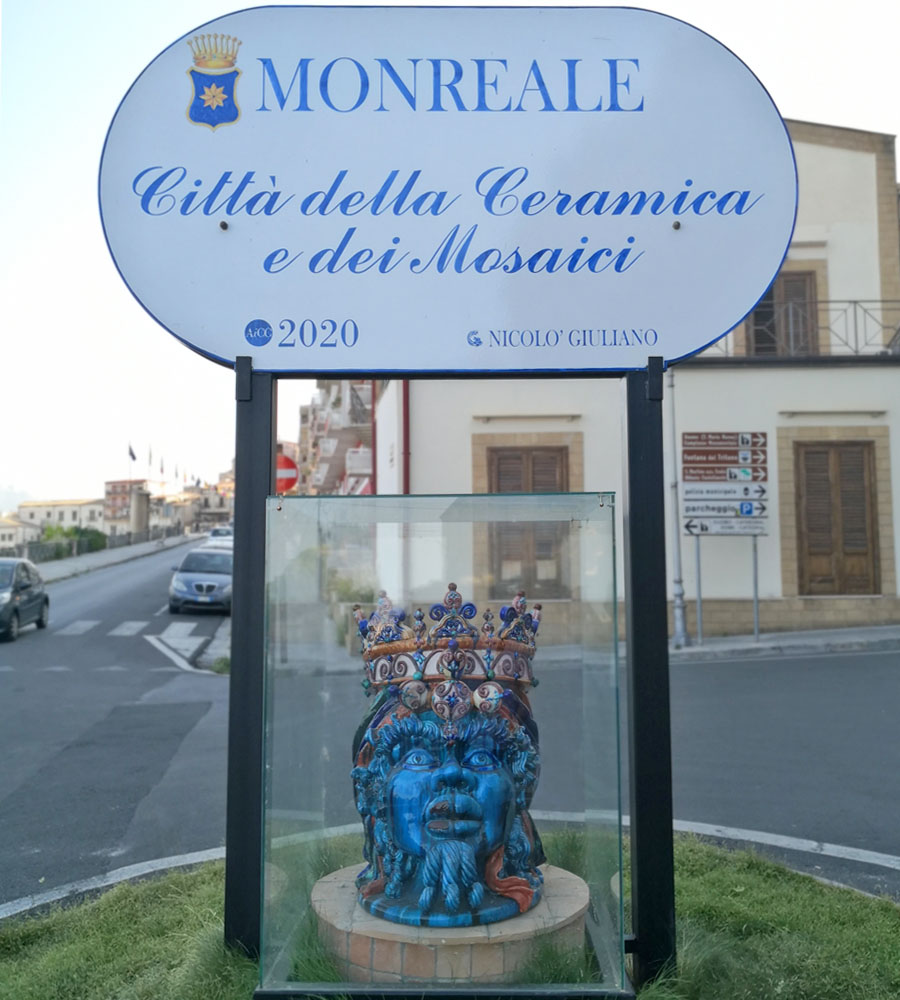
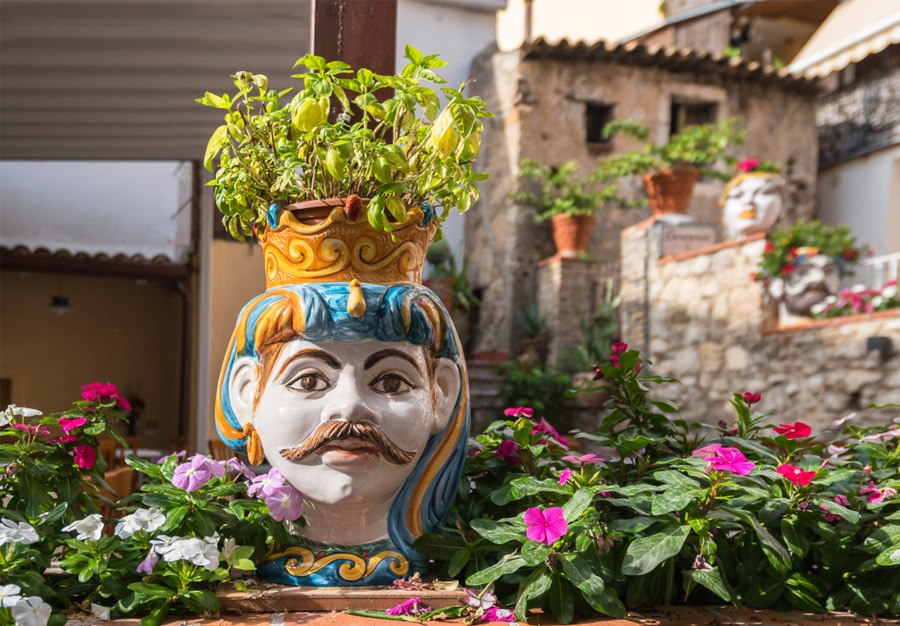
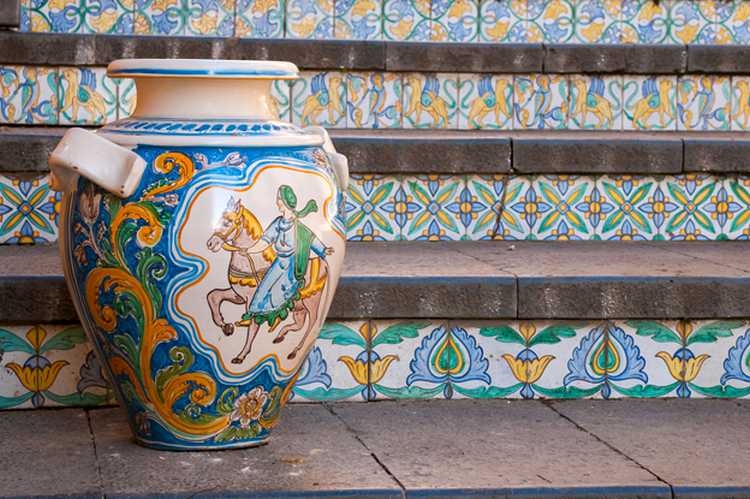
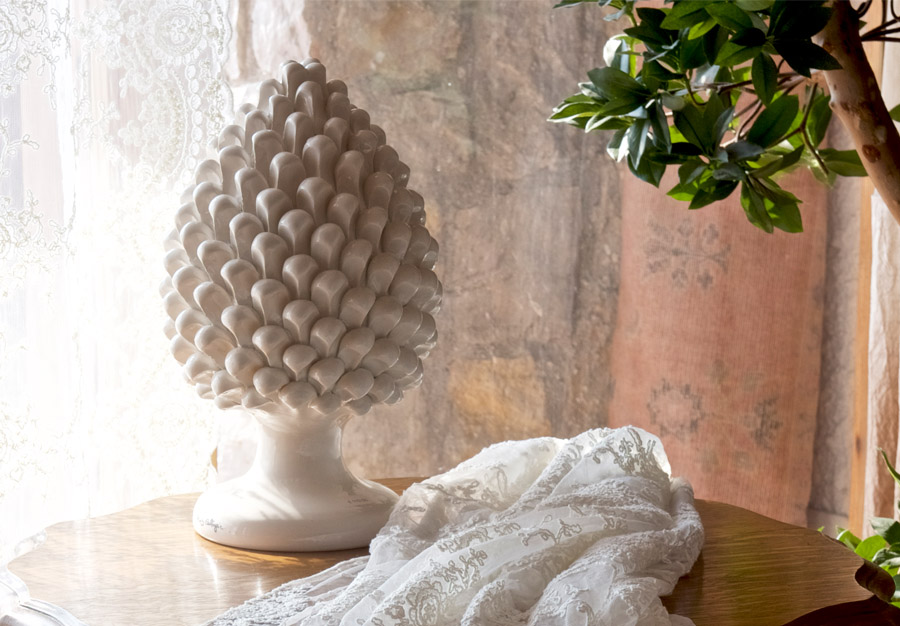
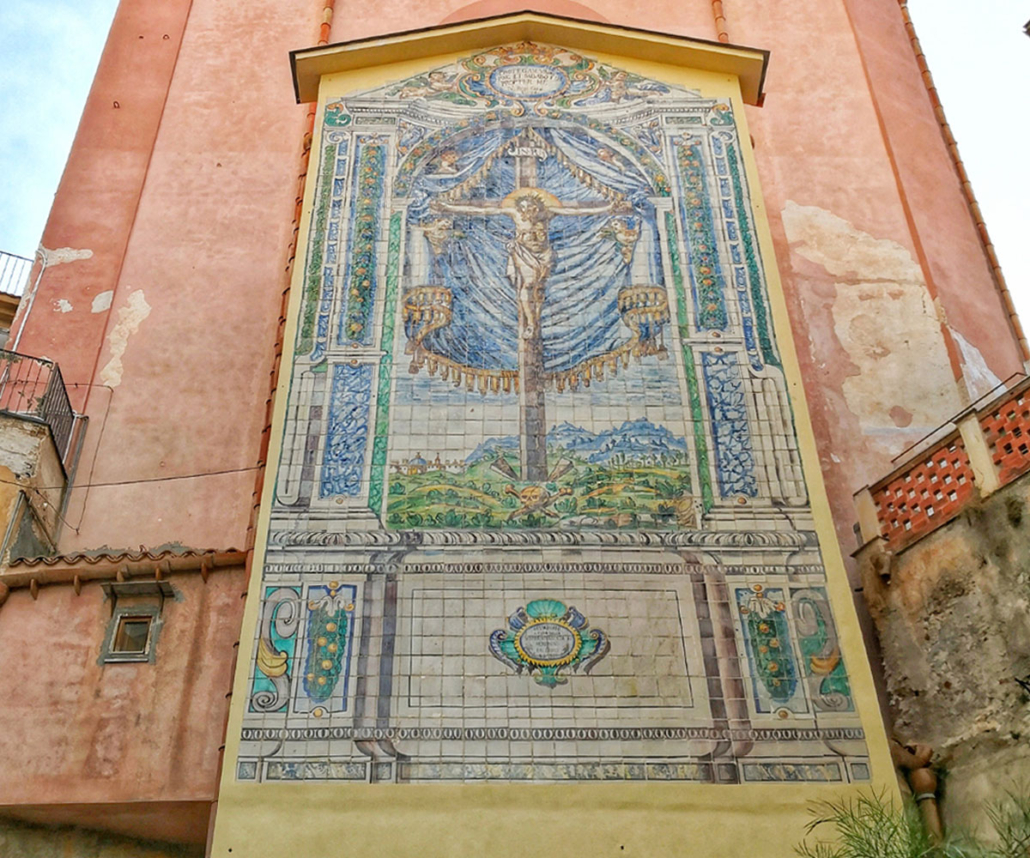
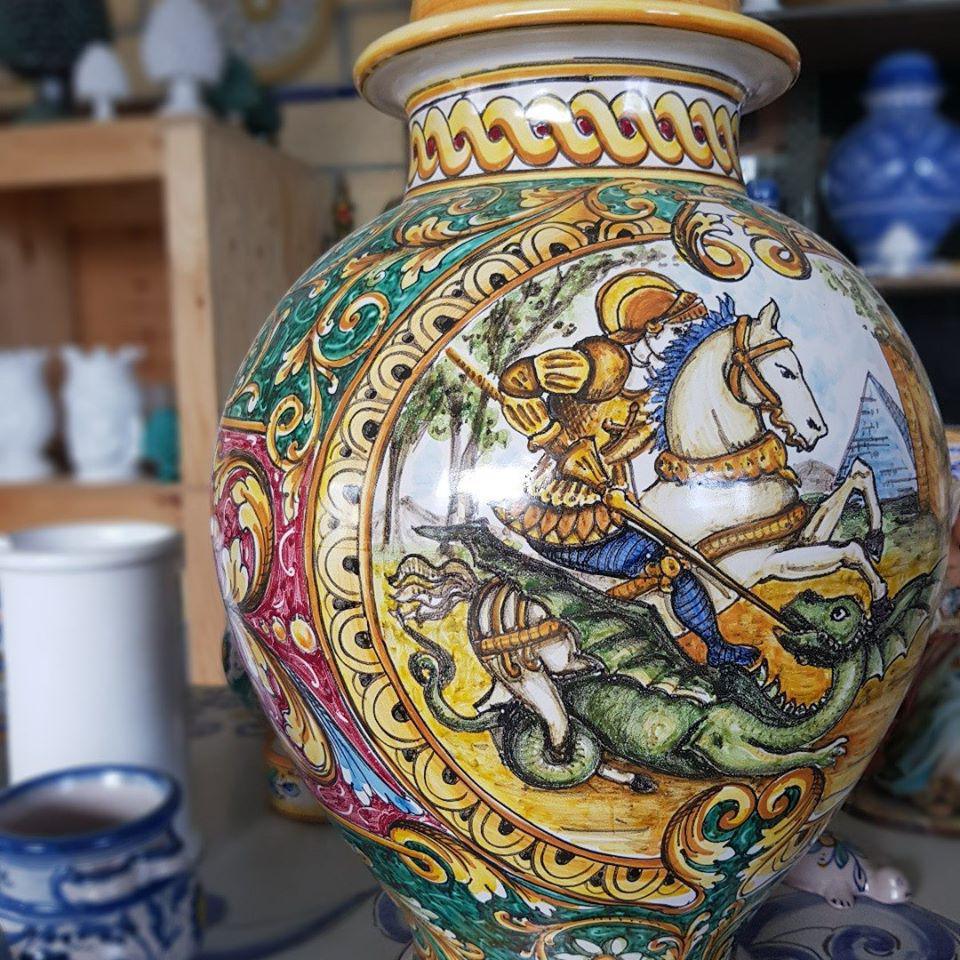
Monreale, since the dawn of its foundation in Norman times, has always been characterised by a strong cultural and artistic vocation. Ceramics in Monreale is still a lively craft activity today, in which technical innovation reweaves the threads of tradition. Ceramics, majolica, porcelain, terracotta, earthenware: different yet similar artefacts, made with soils suitable for lathe work and decorated by skilled hands.
By virtue of its long-lived historical tradition and its deep-rooted handicraft production fabric in the sector, the National Ceramic Council, a body established at the Ministry of Economic Development with the task of enforcing Law 188 of 1990 for the protection of artistic and traditional ceramics and quality ceramics, has recognised the City of Monreale as a ‘City of ancient and established ceramic tradition’. To date, only 46 cities in Italy (including Faenza, Orvieto and Caltagirone) can boast this recognition.
The great quality of Monreale’s ceramic
The craftsmanship of the masters from Monreale and the quality of the raw materials used are the elements that distinguish ceramic works from the Norman city. The high quality of craftsmanship in Monreale ceramics is ensured by a careful selection of the best clays, carefully refined by removing stones and other impurities.
The entire processing cycle is carried out strictly by hand. Shaping, slow drying, firing, glazing, painting: a process that requires time and dedication.
The art of ceramic today
Wandering around the city’s alleys today, it is still possible to find excellent master craftsmen who create ceramic works of great taste and quality. During your visit to Monreale, do not miss the opportunity to visit their workshops to be told about their working methods, while enjoying the technical expertise of their hands at work and admiring the masterpieces they create. Here is an interactive map of these workshops