THE CHURCHES
Beginning from the end of the 16th century in Monreale’s neighbourhood religious and lay brotherhoods flourish, churches and chapels refer to the Baroque style. We quote the churches of Agonizzanti, San Castrense and Madonna dell’Orto among the most valuable expression of norman architecture.
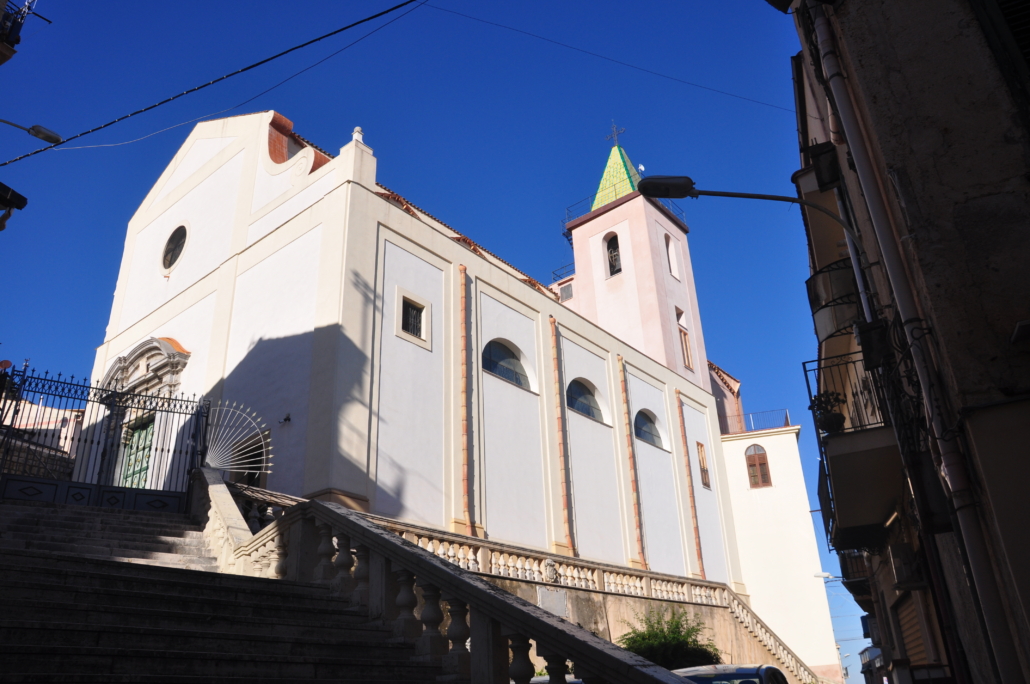
THE CHURCH OF SAINT MARY OF THE AGONIZING PEOPLE
It was built at the end of the 15th century in front of the Dome, on a pre-existing Medieval building which was part of the city walls incorporated in its perimeter. It’s a jewel of the Baroque art. The structure with a single nave justifies its use as former jails’ chapel during the Inquisition’s era. The interior is decorated with the finest style of the Baroque: cherubs, garlands and allegorical statues by Procopio Serpotta, son and scholar of the great Giacomo, who was one of the greatest Sicilian artists of those years.
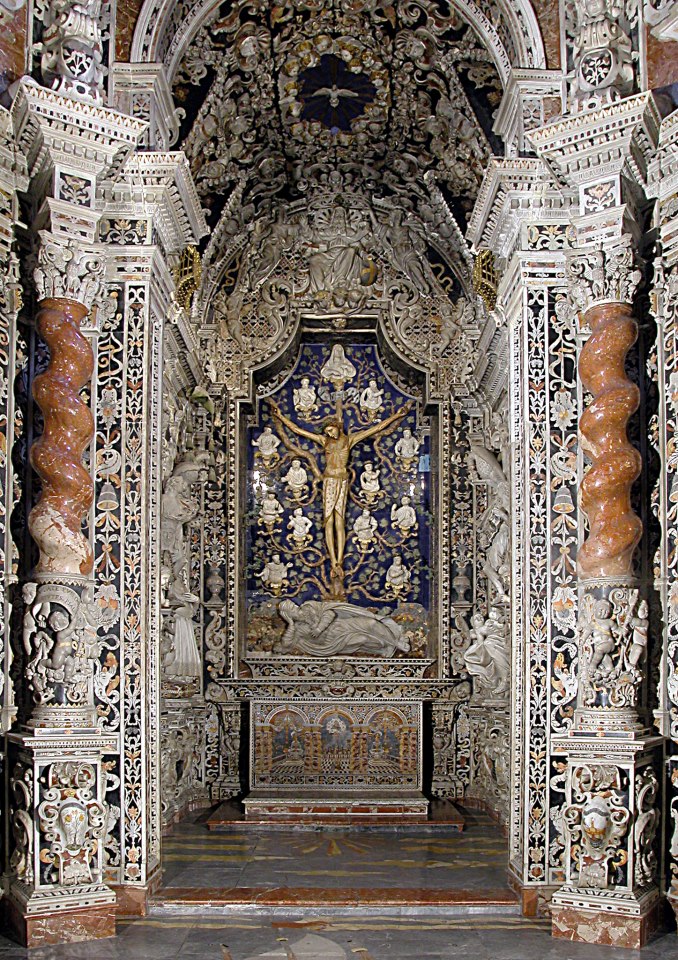
ROANO CHAPEL
The Baroque-styled Crucifix’s Chapel, known as Roano Chapel, is located inside the left nave of the Cathedral, and it was built at the end of the 17th century at the behest of the Spanish archbishop Juan Roàn. Richly decorated with “mixed marbles”, with many polychrome marble inlays, the chapel also hosts the remains of its client. It has a hexagonal plant, surmounted by a dome culminating with a lantern. The decorative apparat illustrates the path of Christian Redemption; in the internal compartment the space is marked out by the statues of the prophets Ezekiel, Daniel, Isaias and Jeremy all pointing at Christ.
THE CHURCH OF SAINT ONUPHRIUS
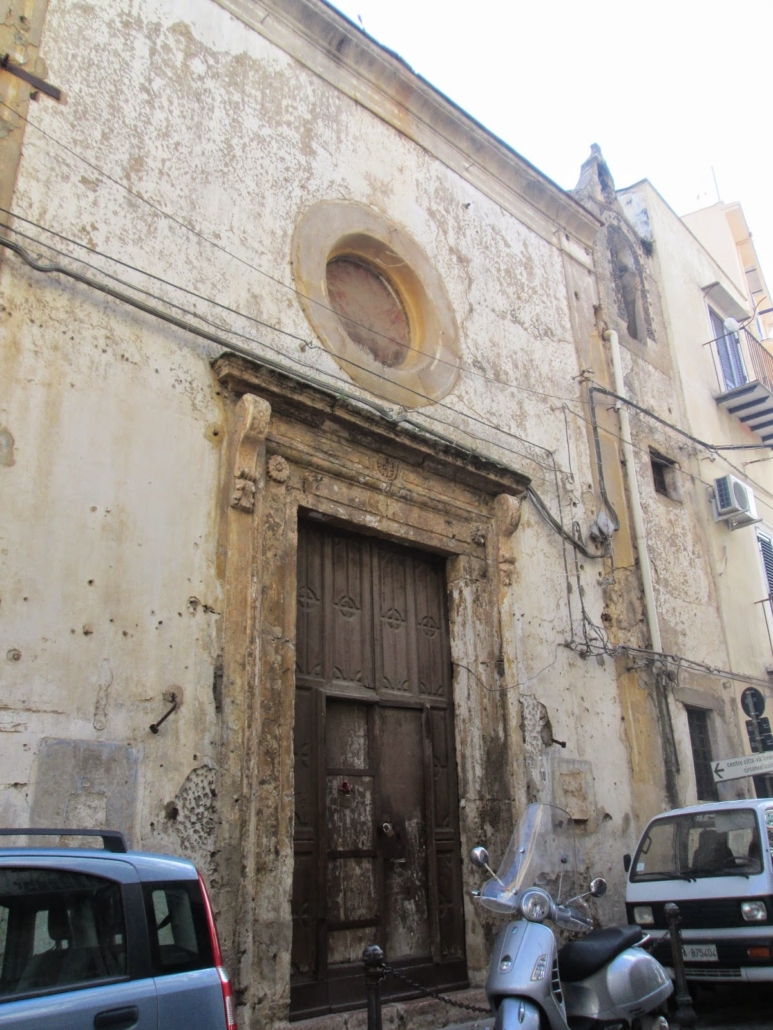
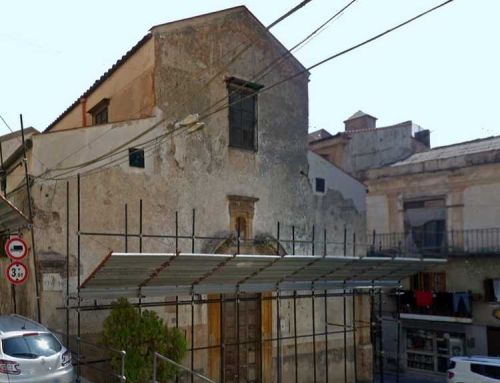
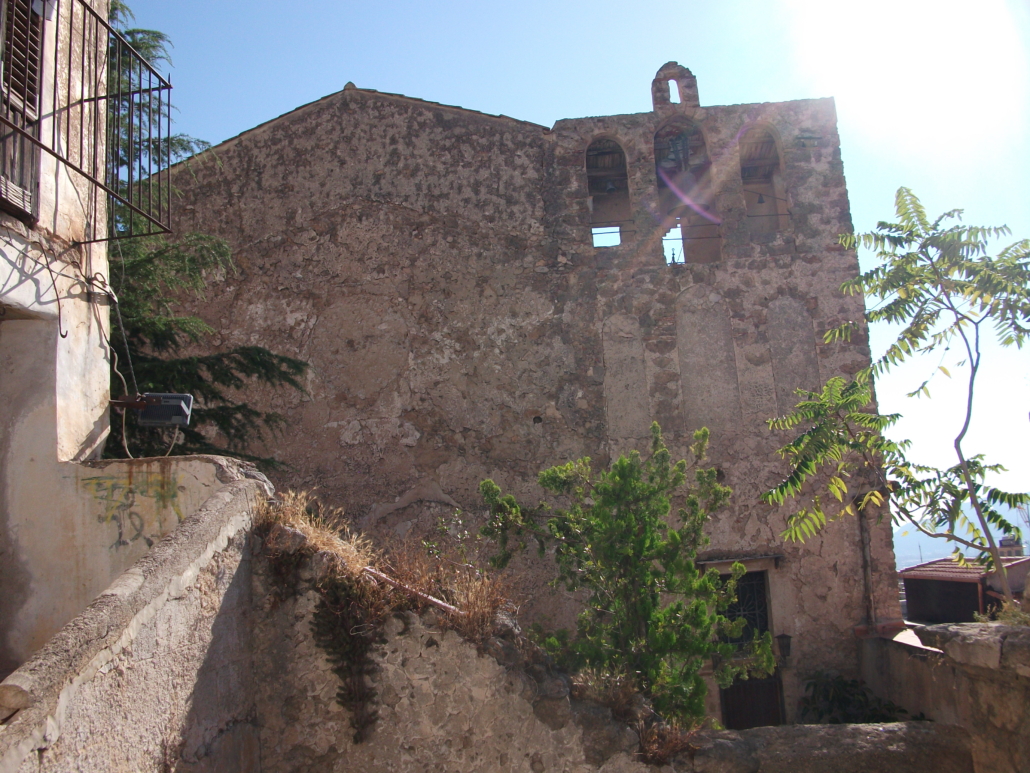
It is one of the least known churches of Monreale and it’s located beneath the Church of Collegiata. Dating back to the second half of the 17th century, the church has just one nave and two overlooks: one on the church of Saint Agatha of the Mounts and the other on Umberto I Street. The façade, which needs some restoration intervention, is composed by a door, a 17th-century portal with the overhanging circular window and a bell tower. Even the statue of Saint Onuphrius needs an urgent restoration
In the 18th century, the church hosted various Monrealese local associations and it’s been the seat of the Confraternity of the Holy Crucifix since 1989. Currently it is not operational and it opens only for the Holy Crucifix’s celebrations.
THE CHURCH OF SAINT AGATHA OF THE MOUNT
It is located in Palermo Street. It has been closed for many years and takes its name from the Company of Pity’s Mount. It has a basilical plant with three naves with Baroque decorations of Serpottian school. The 17th century majolica floor is a real treasure. An imminent restoration is expected.
THE CHAPTER CHURCH OF THE SACRED HEART
It is located on Giovanni Amendola Street, a crossroad of both Palermo Street and Benedetto D’Acquisto Street. Seat of the Grand Bailiwick of Sicily of the Military and Hospitaller Order of St. Lazarus of Jerusalem and the Chapter of the Knights of St. Lazarus in Monreale, it was built at the behest of Archbishop Alessandro Farnese, who entrusted the church to the Jesuits, the day after the Council of Trent. The new Order had been present in Monreale since 1552 and the College had 240 students. Two centuries passed, and in 1767 the Jesuits were expelled from the Catholic kingdoms and therefore from Sicily. The church became a rectory and was entrusted to a secular priest. In 1792, archpriest Benedetto Grimaldi founded the Educatorio del Santissimo Cuore di Gesù (School of the Sacred Heart of Jesus), offering free shelter to 60 poor girls. The building went through various vicissitudes, and was restored and reopened for worship in 2000. Initially designated as the seat of the Teutonic Order, after its removal from Monreale, it became, in 2019, the capitular church of the Order of Saint Lazarus of Jerusalem.
THE CHURCH OF SAINT CAJETAN
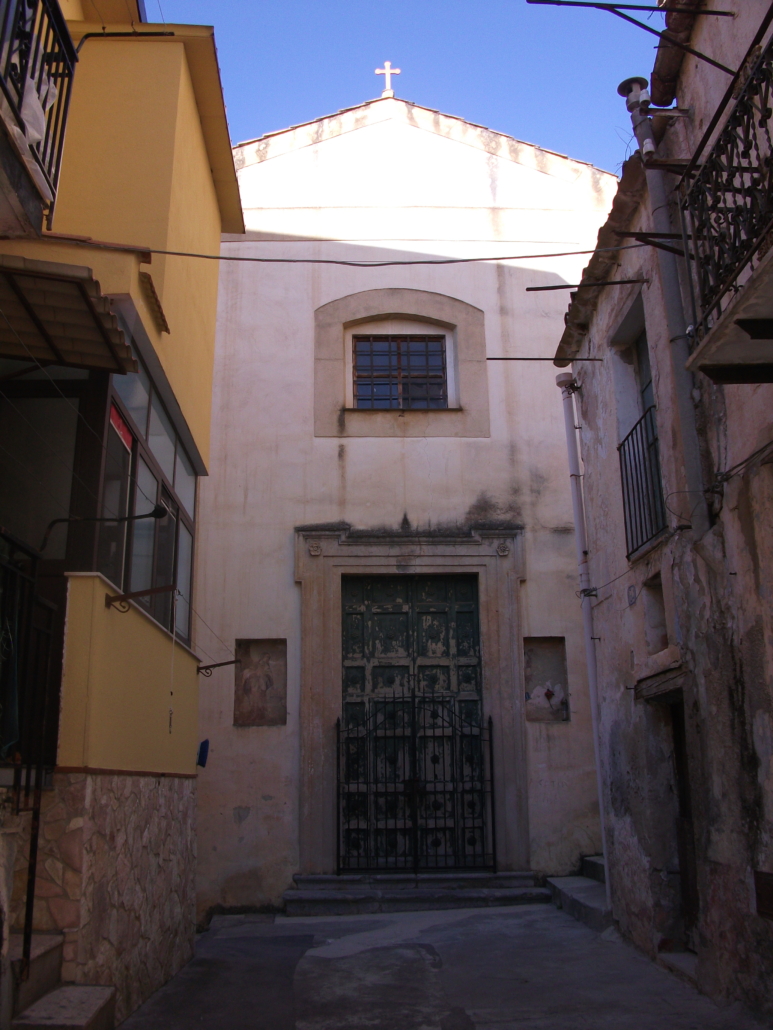
Its construction dates back to the first half of the 19th century; located in Vittorio Veneto Square, It is among the most recent and least known churches of the Norman town. It was originally designated as the seat of Theatine Order; then it was closed and later entrusted to the Albergo dei Poveri, founded by the Archbishop Benedetto Balsamo. Deconsecrated in 1930, during the Second World War it was used as military base by Allied soldiers. In was restored in 1989.
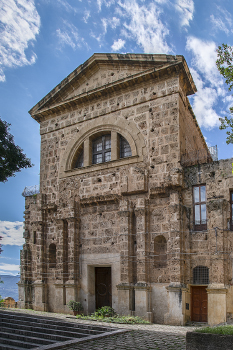
The church has a Neoclassic façade in non-plastered stone, and it’s divided into an inferior part, composed by a double-leaf wooden door and a rectangle-shaped portal in the centre and by pilasters and two niches where the simulacra of two saints of the Theatine order were placed on the sides, and into a superior part, composed only by a lunette window and a tympanum. The interior of the church, which has just one nave with barrel apse, is poorly decorated and characterises by bichromia. The lateral walls host six chapels with overhanging windows closed by golden shutters, from where the nuns attended the religious functions. The major altar is realised in multicolour marble, with a marble staircase of five steps. On the floor we can witness an ossuary commemorating the Monreale war dead of the First World War. It is only opened sometimes as an exhibition space
THE CHURCH OF THE SAVIOUR
It is known as “Collegiata”. It was built in the 17th century for the veneration of the Holy Crucifix: ever since the time of Archbishop Venero, the simulacrum of the Crucifix is carried in procession every year on the third day of May, in memory of the miracle of the disappearance of the bubonic plague in Monreale. The church is on the top of a stairway in Carrubella neighborhood and is richly decorated. On the left wall above the choir we can admire a painting by Matías Stomer.
The simulacrum of the Crucifix, above the altar, belongs to the school of the sculptor Antonello Gagini. At the beginning of the 18th century, on the external wall of the sanctuary a majolica panel of about 50 square meters was created, depicting the Crucifix watching over Monreal.
THE CHURCH OF SAINT ANTHONY OF PADUA
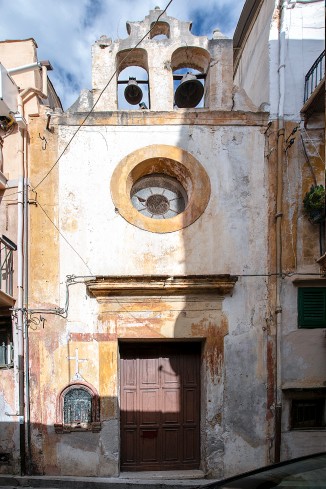
It is, like the Church of Saint Onuphrius, one of the least known churches of Monreale. Also known in Italian as “Chiesa di Sant’Antonino”, it’s located in the Pozzillo neighbourhood and It was built in 1720. It was originally designated as the seat of the Franciscan Congregation of Saint Anthony from Padua, then it hosted the Congregation of the Saints Julian and Eunus, founded in Palermo in 1649 by the order of porters door attendants.
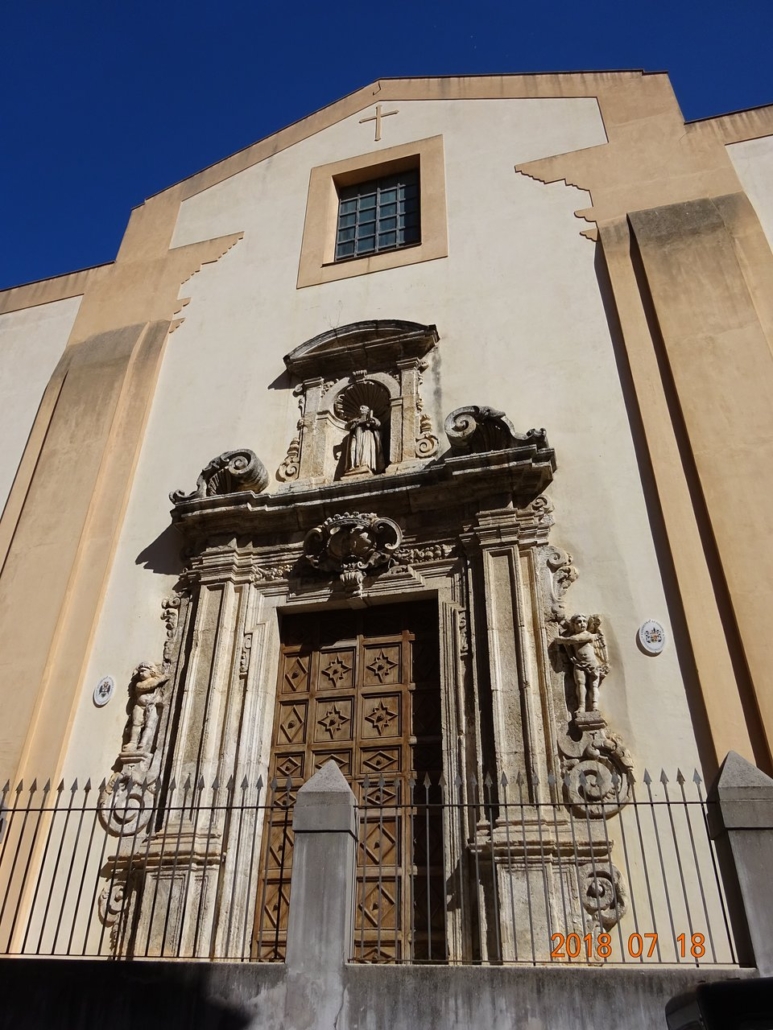
The façade is modest and is composed by a door, a portal, a rose window located above the portal, a bell tower and an aedicule of uncertain date. The interior of the church has just one nave hosting an altar decorated with mosaics, which is brightened by the rose window. Above that we find the statue of Saint Anthony. On the right wall there is a canvas depicting San Sebastiano. To the right of the altar, a plaque commemorates the restoration which took place in 1923 by the Matranga family. The curch is currently being used.
THE CHURCH OF SAINT VITUS
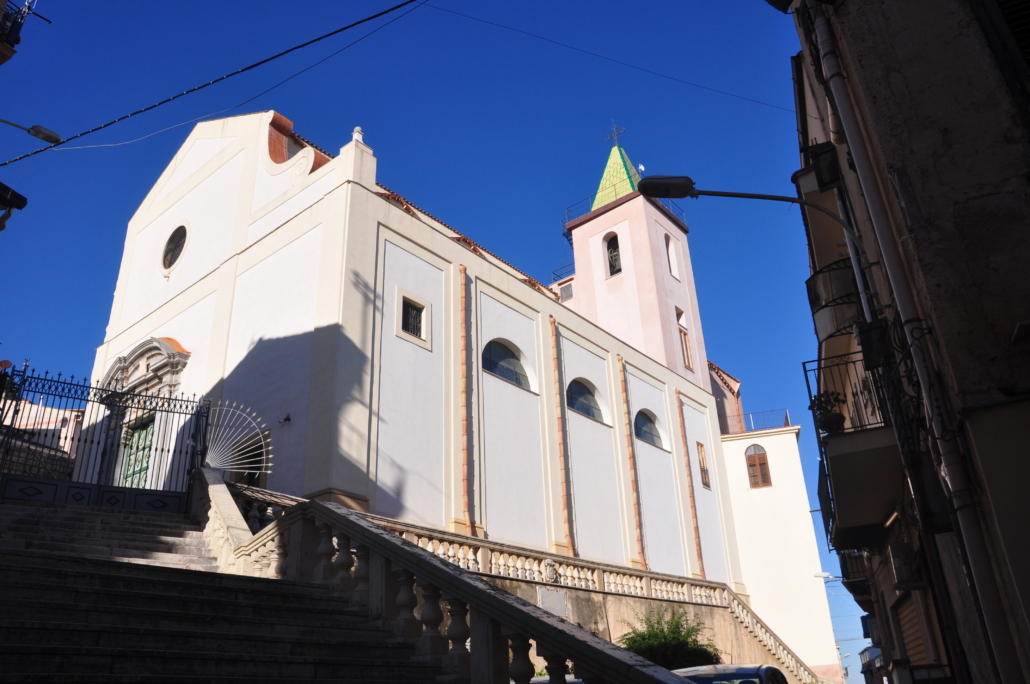
It is located in San Vito neighbourhood, from which it takes its name. It’s the most ancient church of Monreale, being built some years before the Dome, whose construction provoked an economic and social crisis of the neighbourhood, whose effects remain nowadays. The church, with an Arab-Norman style, was built on a squarish base, divided into three naves and its mixed façade has a rectangular shape. This church is characterised by many refurbishments occurred in the course of the time. A first refurbishment dates back to the 16th century, but it’s during the 18th century that a full restructuting of the church happened, especially concerning the internal decorations, which were changed in a more a Neoclassic style. In 1985 the last restoration was carried out: the baptismal font was relocated, while the left aisle was restored, while downpipes and the gutters were added to the church.
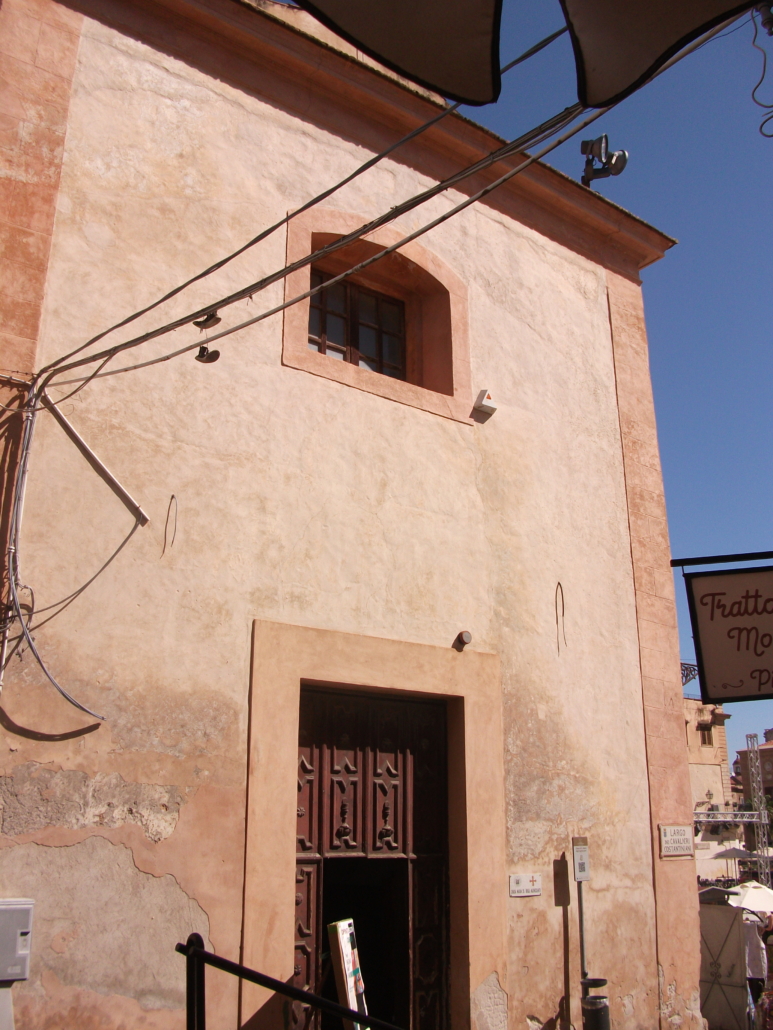

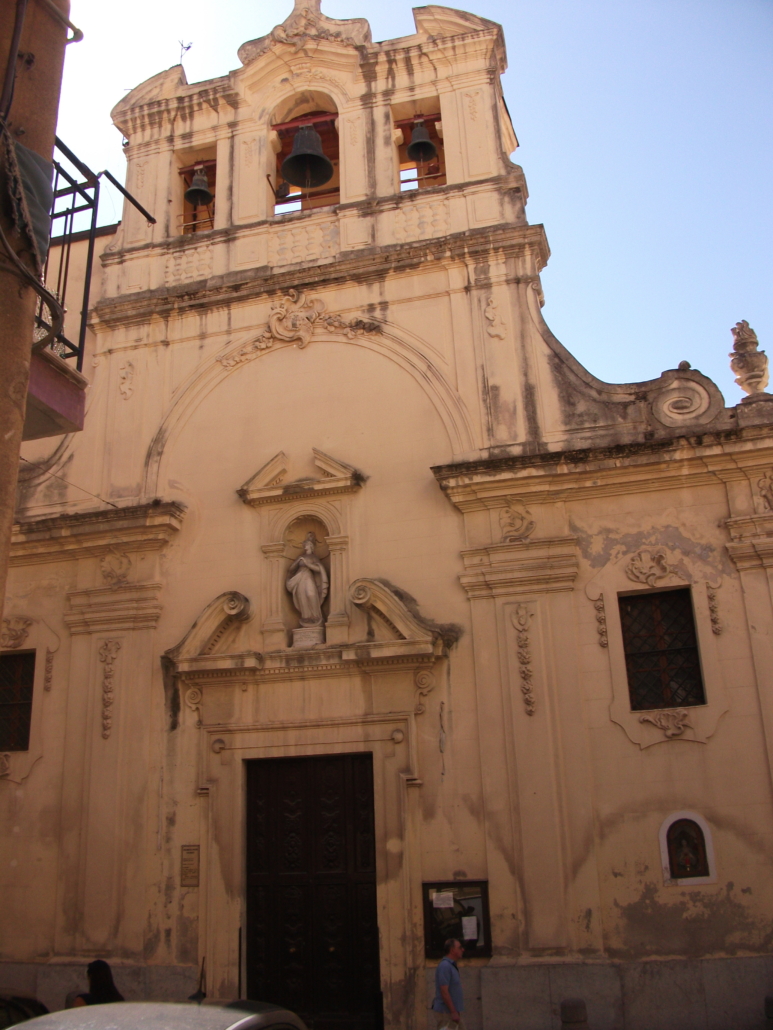

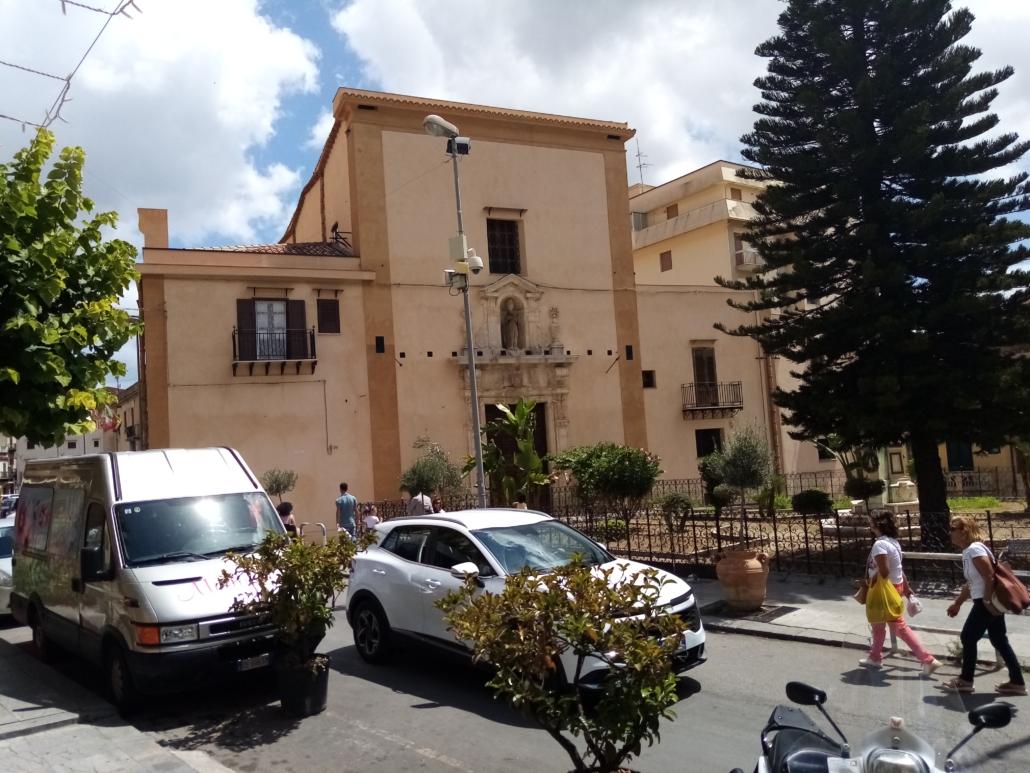
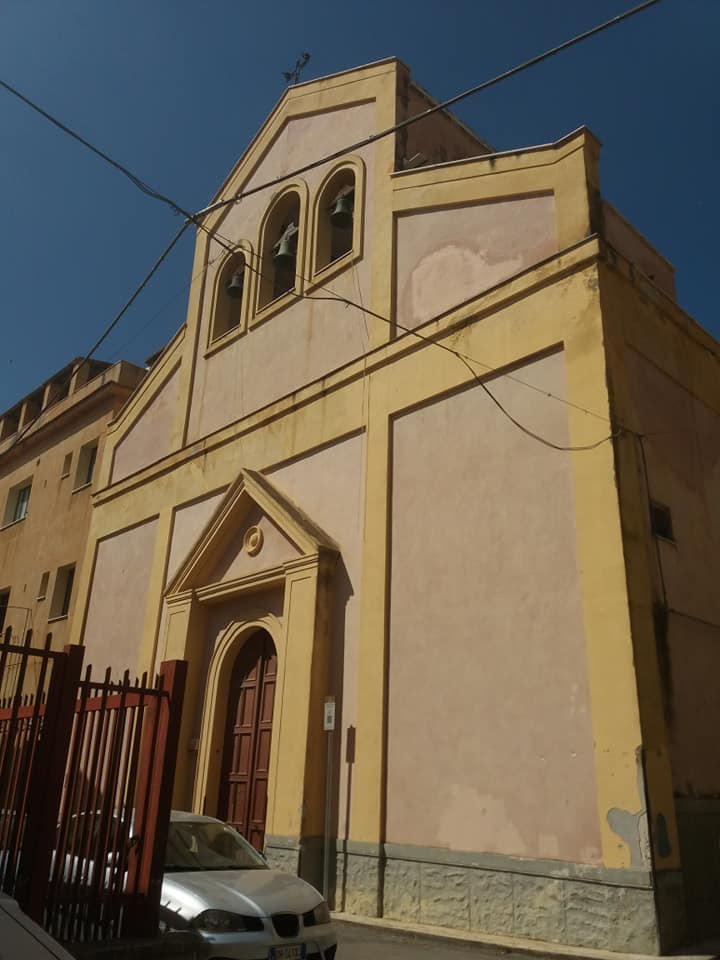
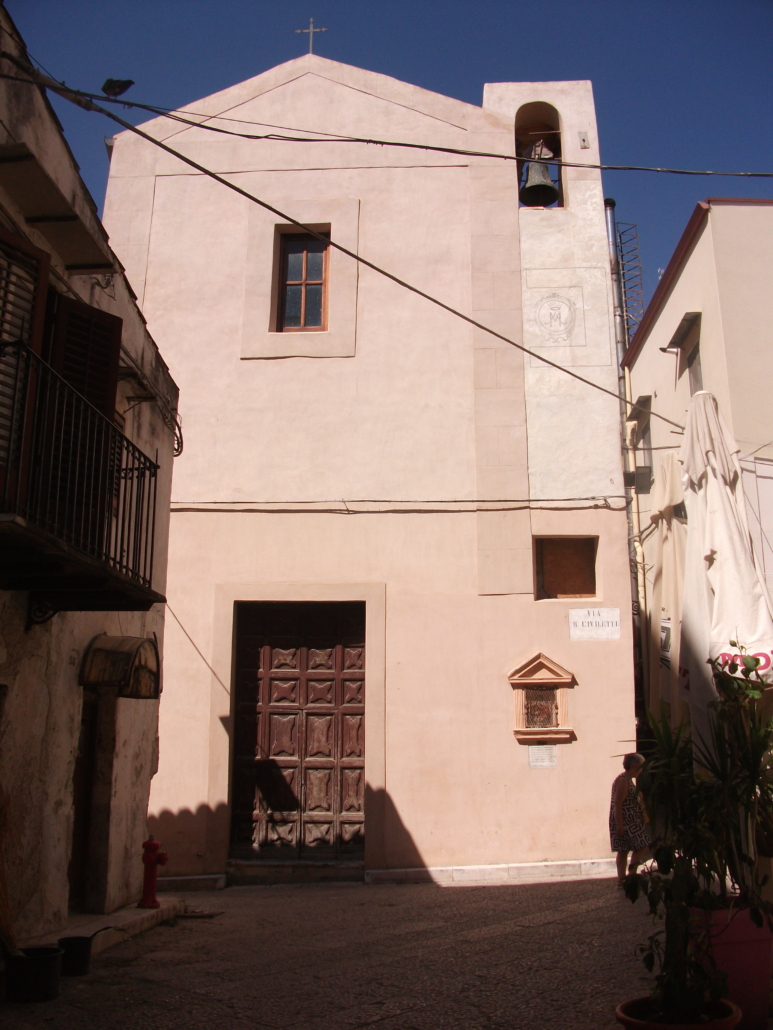
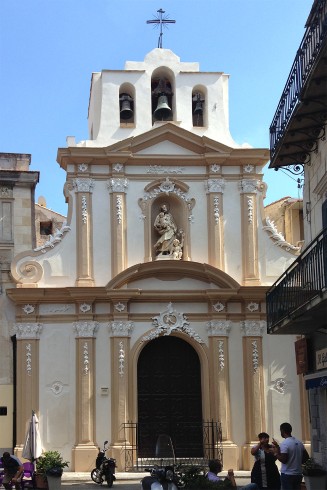
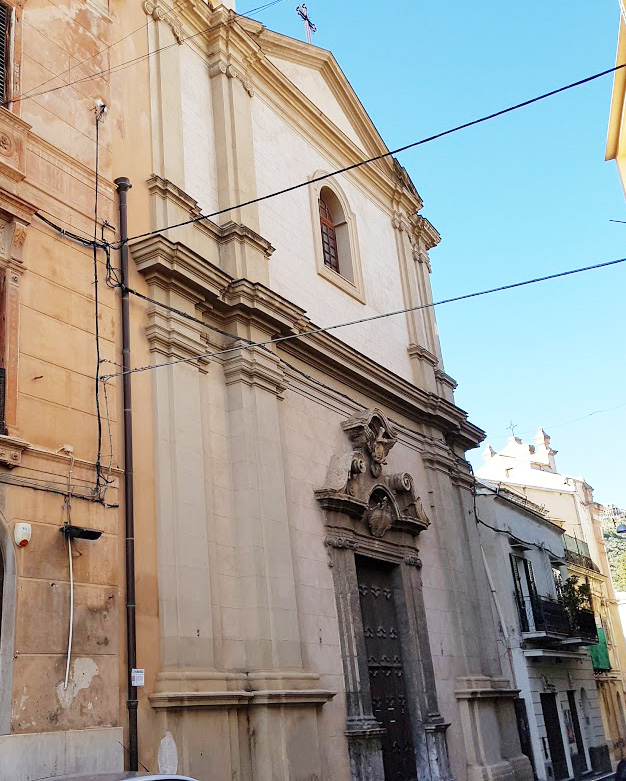
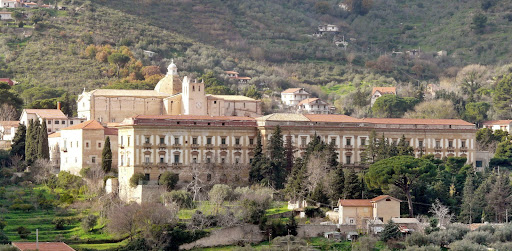
THE CHURCH OF OUR LADY OF THE GARDEN
was erected in 1619 in Bavera neighbourhood within a garden where a small chapel with Mary’s image existed. With a rectangular plan and three naves, the church was enriched by many art masterpieces, including the painting “The Guardian angel” by Pietro Novelli, today exhibited in the Diocesan Museum. The stuccos are Baroque, the altar surrounded by choir stalls in wood covered with a gold patina. In a display case a statue of Sleeping Virgin recently restored is preserved. Around the church a confinement for the Franciscan nuns was developed.
THE SANCTUARY OF OUR LADY OF THE CROSSES
is one of the most picturesque places in Monreale. The road leading to this sanctuary is the ancient Via Crucis, which starts at the Church of San Francesco and crosses the Salita delle Croci to the slopes of Monte Caputo.
This sanctuary, built in 1815 and enlarged in 1844, is connected to the legend of the young Monrealese boy Matteo Giovan Battista Angelo Quartuccio, who in 1812 saw an apparition of Our Lady of Sorrows with the dead Christ on her knees, with whom he began a dialogue. Then the Madonna disappeared and Matteo returned to the village to recount this apparition to a large crowd. Afterwards a new miracle took place: bread appeared in Matteo’s hands, allowing the sick to be healed.
The church is terraced with a single nave with a barrel-vaulted roof and a high altar bordered by Ionic columns. The façade visible from anywhere in the town of Monreale has terraces and recesses. In the tympanum of the church can be seen the painted coat of arms of the Order of the Servants of Mary, namely “SM”, with a crown of seven lilies, the symbol of the Order’s seven founding saints. The floor plan has a single nave, characterised by fluted pilasters with Ionic-type capitals. The hall is separated from the presbytery, rectangular and raised by three steps, by two fluted columns with Ionic capitals. The interior is devoid of decoration except for the presence of fluted pilasters with Ionic-type capitals. Among the decorative elements, we note a fresco by Francesco Manno depicting the Holy Spirit, with a dove, amidst figures of angels. Behind the altar is a large canvas depicting the apparition of the Our Lady to Matteo Quartuccio.
THE CHURCH OF SAINT FRANCIS
is located in Antonio Veneziano, in a barycentric area between San Vito neighbourhood and Carmine neighbourhood. Erected in 1610 and enhaced in 1643, the prevalent style is the Baroque one.
The church has three naves with a whitewashed barrel-vaulted ceiling. In the bowl of the apse is a depiction of the Blessing Christ among angels, surmounting the niche with the statue of the Immaculate Conception attributed to Bagnasco. Above the entrance door is the wooden chancel adorned with stucco work accessed by a wrought-iron staircase. It houses a large organ. The nave is lit by ten windows: five on the column arches of the right aisle, five on those of the left aisle, while two square windows open on either side of the entrance door and two on the apse.
The overall plan of the building is longitudinal and has three naves divided by round arches, which stand on stone columns. The two side naves are distinguished from the central one by their smaller size. The main façade is characterised by a portal, framed by two pilasters rising to just over half the height of the entire building. The portal is surmounted by a niche, inside which is a statuette. The wooden door, with a four-sided opening, has inlays. The bell tower has a central loggia housing three bells.
THE CHURCH OF OUR LADY OF THE GRACES
is called, inside the town, “Church of the Holy Home”, and was erected in 1703 on a pre-existing church dating back to 1513. One of the least known churches in the Norman town, it’s located in Bavera neighbourhood and was originally the seat of the Congregation of the Capuchin friars.
The church has only one nave with an east-oriented apse and three views; it has a modest façade where we look at the portal with the surrounding niche containing a ceramic image of Our Lady nursing Baby Jesus and the tympanum which surrounds it. At the apse’s sides we find the bell tower. The interior has lateral chapels, including that of Saint Francis, where we find an artistic wooden tabernacle dating back to the end of the 17th century. At its sides we find 12 little squares with apostles’ images made by Pietro Novelli’s school.
Restored many times during the course of the time, today it belongs to the Cathedral’s parish and it’s opened to the worship. Further restoration work has recently begun.
THE CHURCH OF SAN CASTRENSE
is the only surviving element of a monastic complex built in 1499 at the behest of Giovanni Borgia to host the Benedictine nuns. The church, with a rectangular plan and only one nave, was restored in the 17th century by the archbishop Venero. In lateral walls there are blind chapels ornate with altars in inlaid marble, framed by arches decorated with stuccos of Serpottian school. Above the altar the “Lady of the People in Glory” by Antonio Novelli (1602), father of the more famous Pietro, is placed.
Long the lateral chapels statues and paintings follow one another. In the upper part of the right aisle, the goose-breasted gilded iron windows are still visible, from which the nuns participated in the sacred functions. The entrance is dominated by an eighteenth-century wooden choir.
THE CHURCH OF OUR LADY OF THE CARMEL
is located in Carmine neighbourhood and was erected in in 1560 by the canons of the Cathedral under Cardinal Archbishop Alessandro Farnese, and was handed over to the Carmelites in 1561. At the same time, a convent was built in the garden of the Court and in 1613 a cloister was built by the Archbishop Arcangelo Gualtieri. After the Italian unification, the convent and church became state property. The layout is square, with three naves and seven altars.
The main nave is higher than the side aisles. Eight arches, four on each side, give access to the side naves and the chapels in them. In the presbytery, the large canvas on the altar depicting Our Lady of Mount Carmel with Child stands out. The entrance door is surmounted by a chancel with a parapet.
The church has a rectangular floor plan with three naves and a rectangular presbytery. The nave is separated from the raised presbytery by a large arch. The main façade, finished in plaster, is framed by pilasters that highlight the structural parts of the building. In the centre, the entrance portal, with pilasters surmounted by a tympanum, is in axis with the bell tower. The bell tower has three large bells and one small one. The large canvas on the altar of the Church of the Carmine features a very original depiction of Our Lady of Mount Carmel with Child. It is a work created in 1600 by Pietro Antonio Novelli.
THE HODEGETRIA CHURCH
as known as “Itria Church”, is located in Carmine neighbourhood. Erected in 1596, it’s dedicated to “Our Lady Hodegetria”, this is “she who indicates the way”, cult of Byzantine origin linked to an icon having been venerated in the territory since the Middle Ages. The simple façade contrasts with the opulence of the interior decorated with Serpotta’s stuccos and affrescoes of Pietro Novelli’s school, such as “Saint Francis receiving the stigmata” in the vault of the presbytery. On the altar the blade of “Our Lady of Itria”, by Giuseppe Alvino, dating back to 1590 and today inside the Diocesan Museum, was placed.
In 1646 in an area of the church the Saint Catherine’s Hospital, that with a beautiful Baroque façade overlooks Pietro Novelli street, was erected: today, it hosts the modern found of the Municipal Library “Saint Catherine” and the Historical Municipal archive entitled to the Monrealese historian Giuseppe Schirò.
THE CHURCH OF SAINT JOSEPH
erected between the 17th and the 18th century, rises in Vaglica Square and it’s one of the most beautiful Baroque churches of Monreale. It was originally the seat of various religious congregations and has a Greek-cross plan with three naves.
The lateral naves are divided into bays with round arches and vaulted ceilings decorated with geometric and naturalistic decoration in golden stucco, while the central nave features two barrel-vaulted arms, also decorated with decorations similar to those on the cross vaults of the aisles. At the cross of the two barrel-vaulted arms of the central nave we find a round dome.
The walls are divided into an inferior part, where we have fluted pilasters with Corinthian capitals, and into a superior part, where we find geometric and naturalistic decorations in stucco as well as some windows in the lunettes.
The façade, characterized by bichromia, is Neoclassic and is divided into an inferior part, composed by a door, a round arch-shaped portal and pilasters with Corinthian capitals being decorated with naturalistic motifs, and into a superior part, composed by a niche where the simulacrum of Saint Joseph is placed, a bell tower and the identical pilasters found in the inferior part. Restored in 2015, the church is open for worship.
THE CHURCH OF THE HOLY TRINITY
belongs to the complex of Mary’s College, an institute a stone’s throw from the Dome founded in 1724 by the brothers Alberto Greco Carlino, archpriest, and Lorenzo Greco Carlino, canon, designed to provide religious (and other) education for all the Monrealese girls of the time. The church was founded two years after the Bourbons seized power in Sicily, in 1736. King Charles III spent large sums of money on its construction with an extremely fast schedule. The building is characterised by a single street façade, namely the elevation of Roma Street, one of the most important and busiest streets in Monreale. Communication with the wings of the Collegio di Maria takes place through two side entrances.
The interior is enriched with interesting frescoes, and features four minor altars, flanked by pilasters in 18th-century style, many of them refined, interspersed between the main entrance and the two side entrances, from which it communicates with the other wings of the historic building. The round arches are surmounted by light mouldings, on which rests an undecorated band, itself surmounted by a cornice. Above this is the drum of the large central dome, where there are windows concealed by brass grilles, also in typical 18th-century taste, in use during the period when cloistered nuns were present in the Institute. Exterior and interior of the Trinity Church.
THE BENEDICTINE ABBEY OF SAN MARTINO DELLE SCALE
is located on the homonymous mountainous fraction of Monreale. The works of its erection began in 1564 and ended in 1595. We learn these two dates from both the rich documentation situated inside the Historical Archive of the Abbey and the two inscriptions in marble situated on the external façade of the same church. The dedication (consecration to the veneration) of the church happened on the 20th May 1602, during a solemn rite presided over by the Archbishop of Palermo, Diego Aedo. Inside, the abbey church presents itself in all its sobriety. If we look, in fact, at the later interventions to embellish both the apsidal space and some of the chapels, we understand that the monks’ intention was to have the walls of the church covered with marble and other decorations. But the grandiose project was never fully executed, due to lack of funds. Nothing remains of the church prior to the present one, only a few marble works from the end of the 15th century such as the statue of Our Lady of Consolation, a portal and a stoup
The Dome of Monreale is an architectural marvel of Romanesque-Latin-Norman-Byzantine style: it is simple, majestic and severe. It shows off a great profusion of wealth, with mosaics on a gold background surrounding the internal of the Dome for more than six thousand square meters…
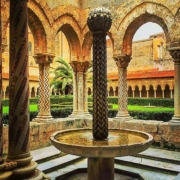
The Benedictine Cloister was part of the monastery and is one of the most important cloisters of all the Mediterranean area. It’s the heart of the entire Abbey Complex and It is a wonderful example of Byzantine architecture in Sicily…
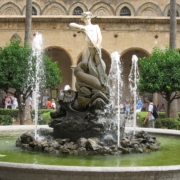
Being a town built on the slopes of Mount Caputo, fountains are essential. The lower part of Monreale benefits from the water taken from the Oreto river, but at the same time has no water sources in its upper part. An archbishop in the 1700s decided to solve the problem by building an aqueduct to bring water to the homes of inhabitants of Monreale…
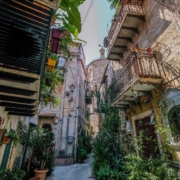
In the Historia della chiesa di Monreale, published in 1596 by the archbishop Ludovico II Torres (written using the pseudonym of Gian Luigi Lello) , we find out that Monreale was divided into four parts. The first and most ancient, the Pozzillo, took its name from the flowing water…
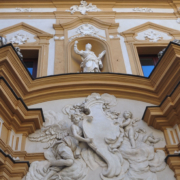
The first core of the library “Santa Maria La Nuova” dates back to the arrival of the monks who received many privileges from king William: among other things, the abbot was elevated to the rank of archbishop and the abbey had “libris et sacris vestibus argento et auro”…