
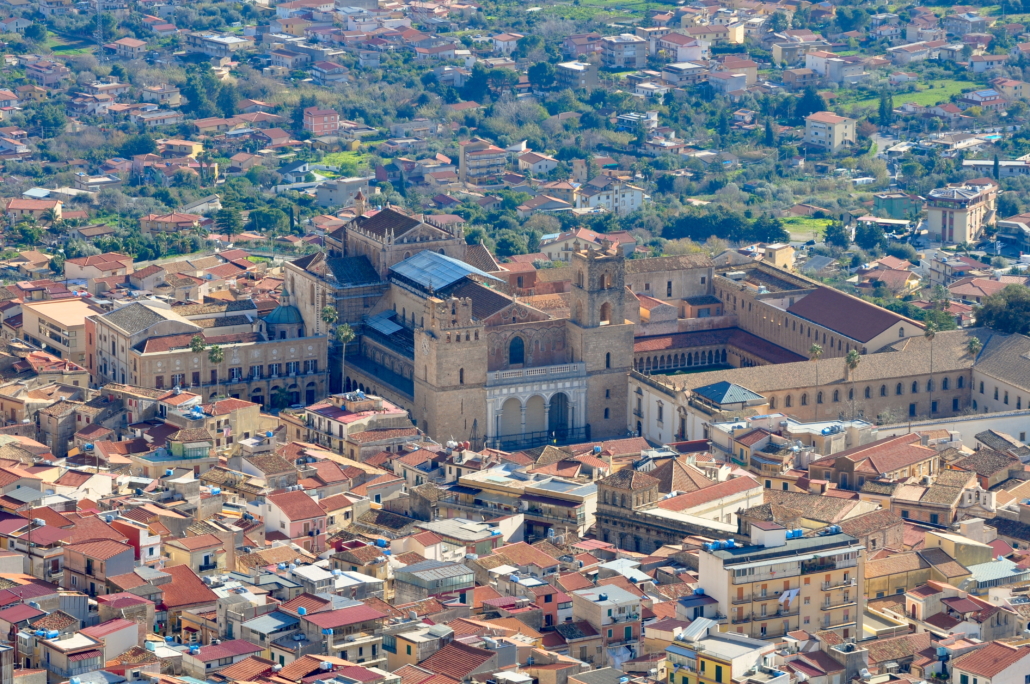
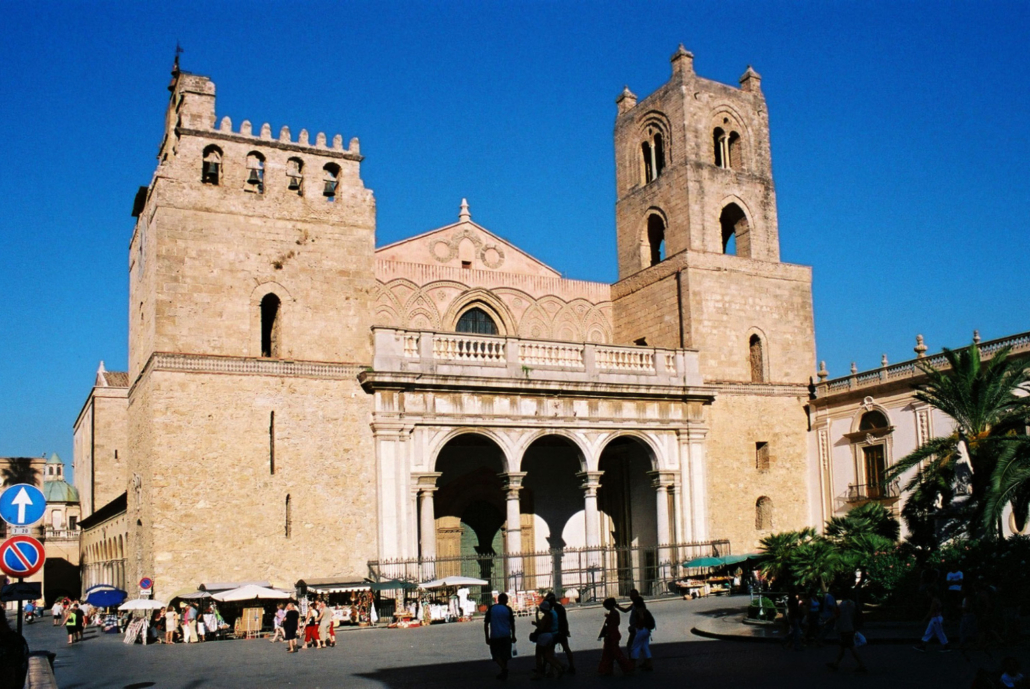

The Dome of Monreale is an architectural marvel of Romanesque-Latin-Norman-Byzantine style: it is simple, majestic and severe. It shows off a great profusion of wealth, with mosaics on a gold background surrounding the internal of the Dome for more than six thousand square meters…
The Benedictine Cloister was part of the monastery and is one of the most important cloisters of all the Mediterranean area. It’s the heart of the entire Abbey Complex and It is a wonderful example of Byzantine architecture in Sicily…
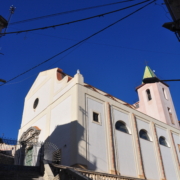
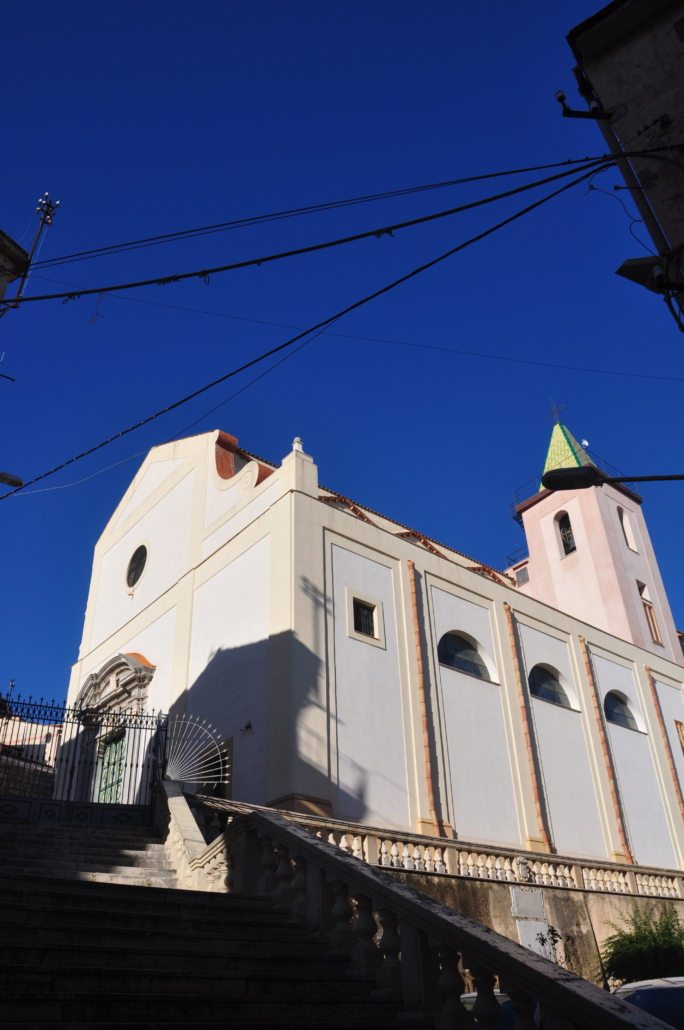
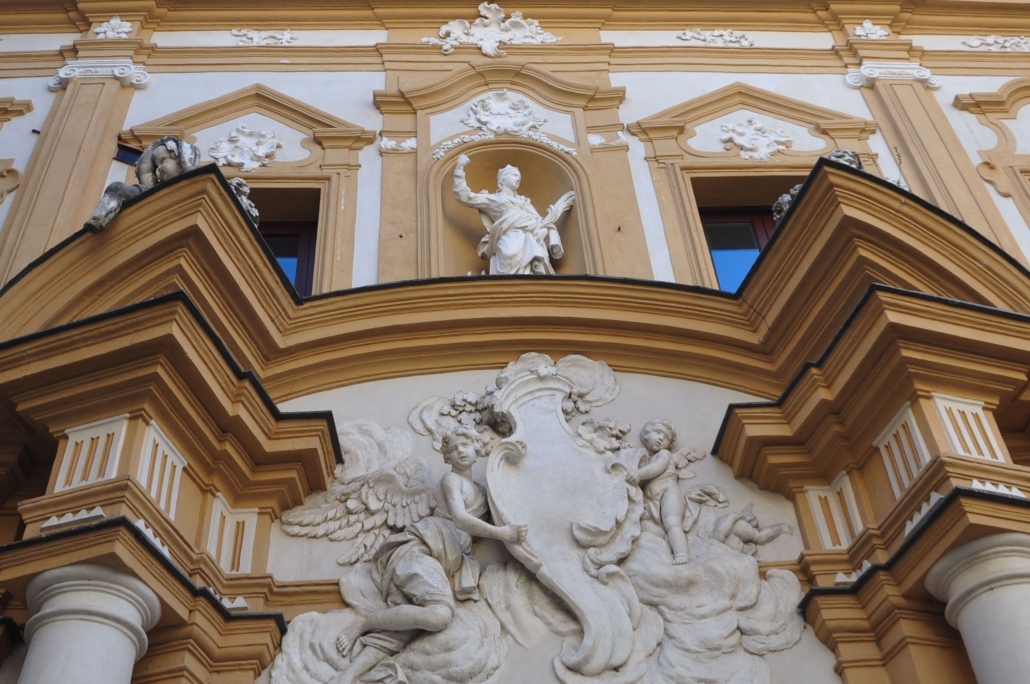
At the end of the 16th century, in Monreale’s neighbourhoods citizens started building many churches and chapels in order to express their religious devotion and show their charitable commitment to God, emphasizing their sense of brotherhood. Those buildings use the Baroque architectural canons…
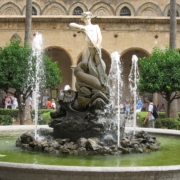
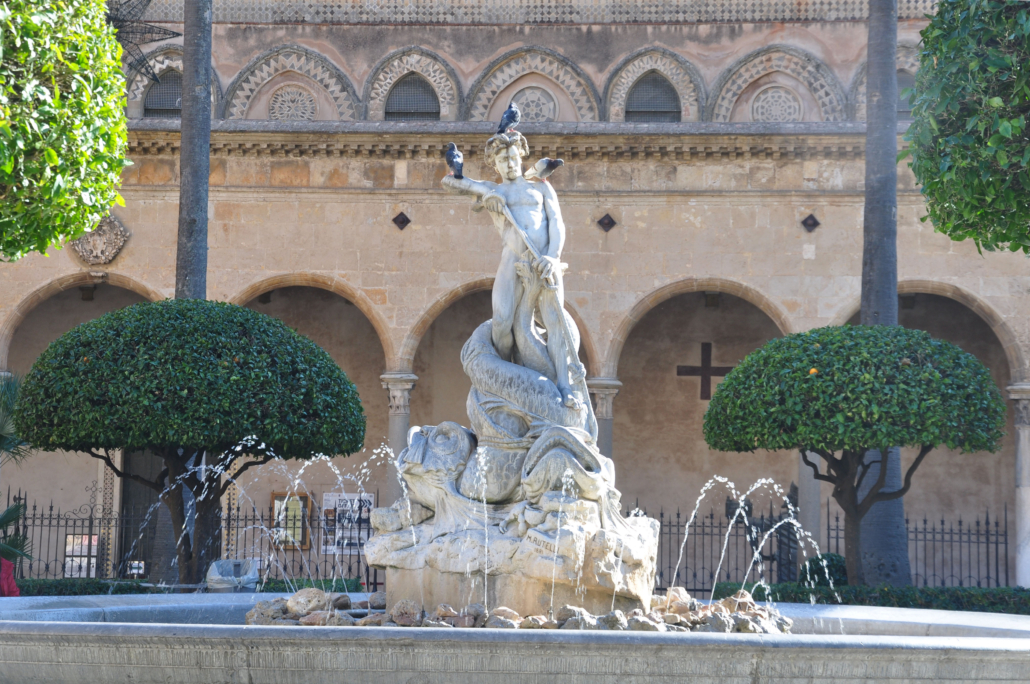
Being a town built on the slopes of Mount Caputo, fountains are essential. The lower part of Monreale benefits from the water taken from the Oreto river, but at the same time has no water sources in its upper part. An archbishop in the 1700s decided to solve the problem by building an aqueduct to bring water to the homes of inhabitants of Monreale…
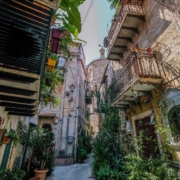
In the Historia della chiesa di Monreale, published in 1596 by the archbishop Ludovico II Torres (written using the pseudonym of Gian Luigi Lello) , we find out that Monreale was divided into four parts. The first and most ancient, the Pozzillo, took its name from the flowing water…
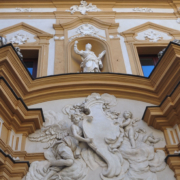
The first core of the library “Santa Maria La Nuova” dates back to the arrival of the monks who received many privileges from king William: among other things, the abbot was elevated to the ramk of archbishop and the abbey had “libris et sacris vestibus argento et auro”…