
THE FOUNTAINS OF MONREALE
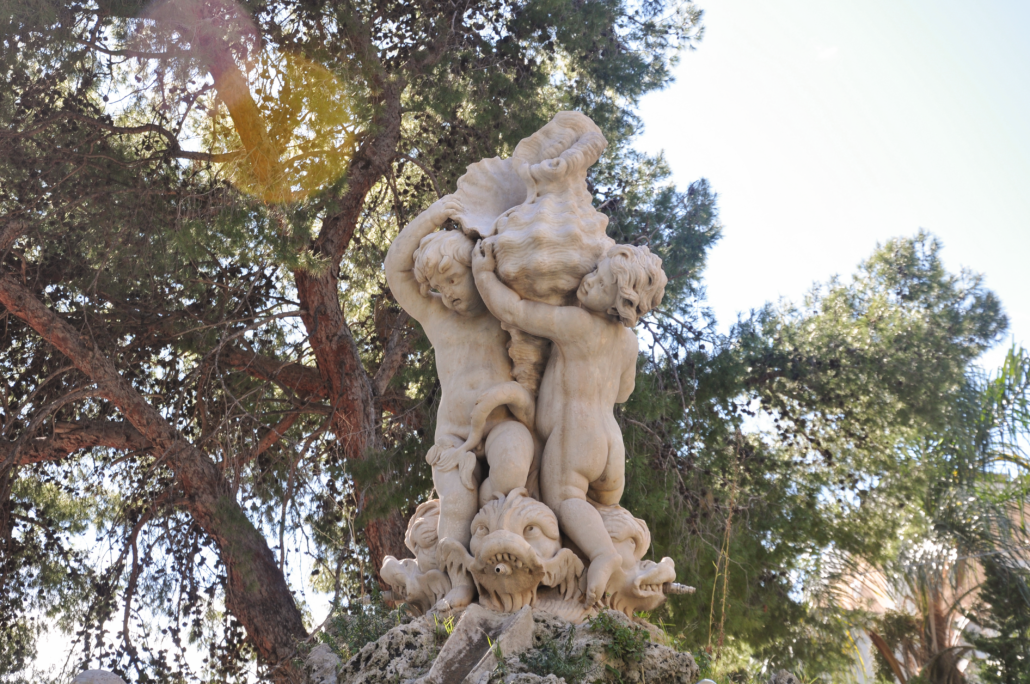
The monumental road built by the Archbishop Testa possesses many fountains: the first fountain in the first in the sharp bend is the Fishermen’s Fountain: it was built using an elegant white marble and stone and it’s considered one of the greatest achievements of the renowned sculptor Ignazio Marabitti. In the interior of the polygonal basin, there’s a rock where three cherubs play with some fishes, supported by a large shell; on another rock, a cherub holds in his hand a fishing pole. Verses are engraved on a plaque inviting passers-by to quench their thirst and enjoy the shade.
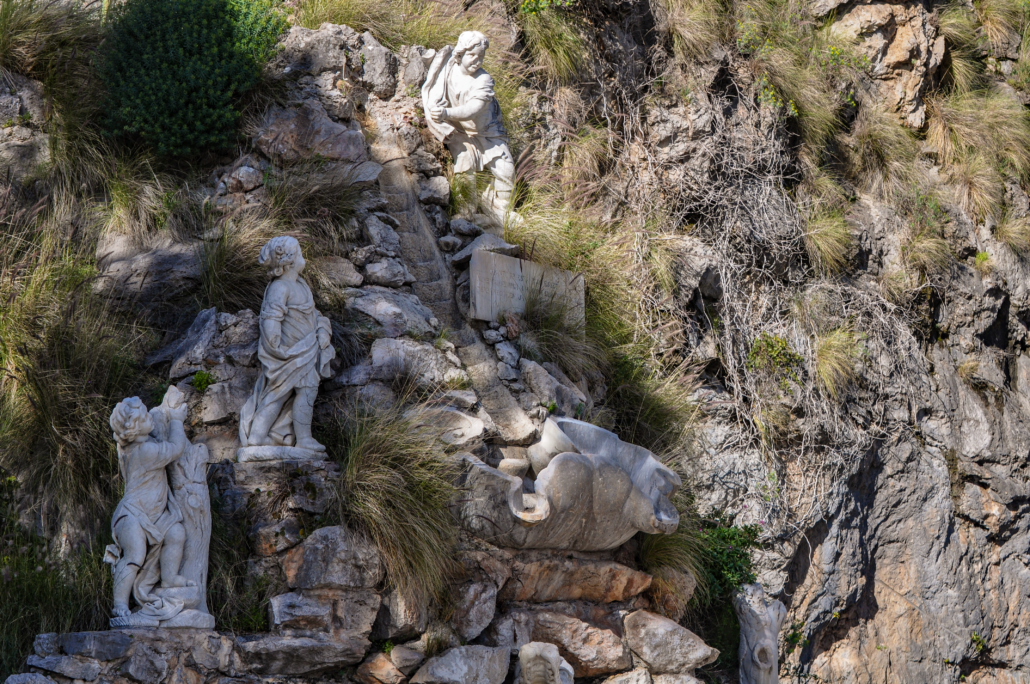
About halfway after the hemicycle bend the Dragon’s Fountain appears, the most monumental out of of all the fountains built by Ignazio Marabitti, so called in honour of the dragon who, coming out from under the cave, scares off a group of children climbing the mountain.
With its pyramidal profile, the fountain reproduces a scheme being already present in Palermo during the 17th century: the dragon is a metaphor of the dark to be defeated; the shell in the foreground is the symbol of Palermo, a fertile “golden basin” enriched by the waters from the Oreto river.
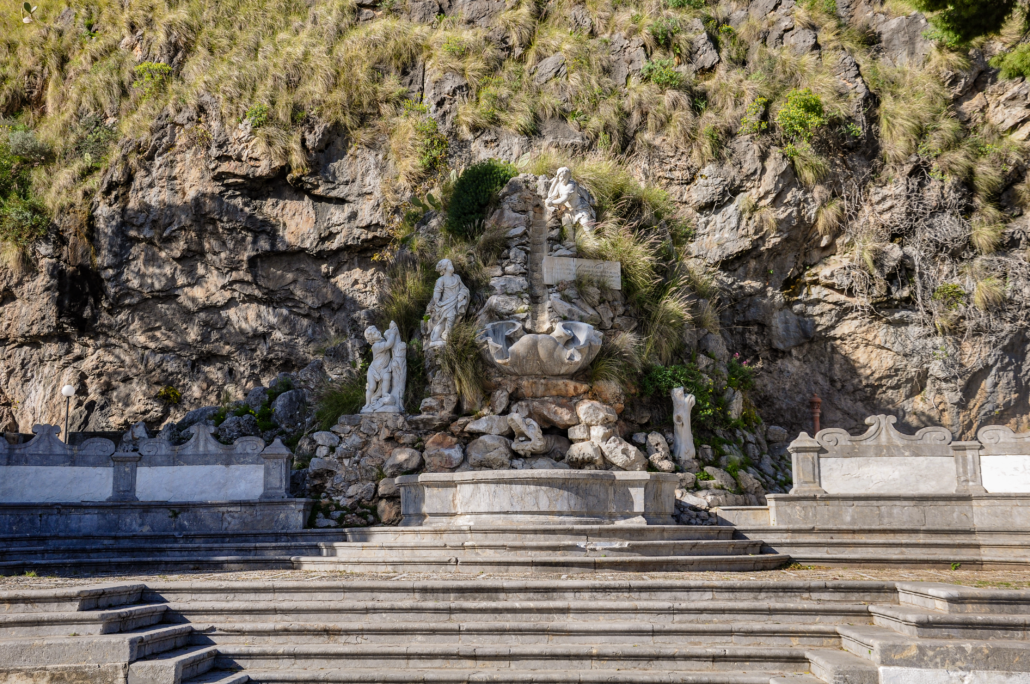
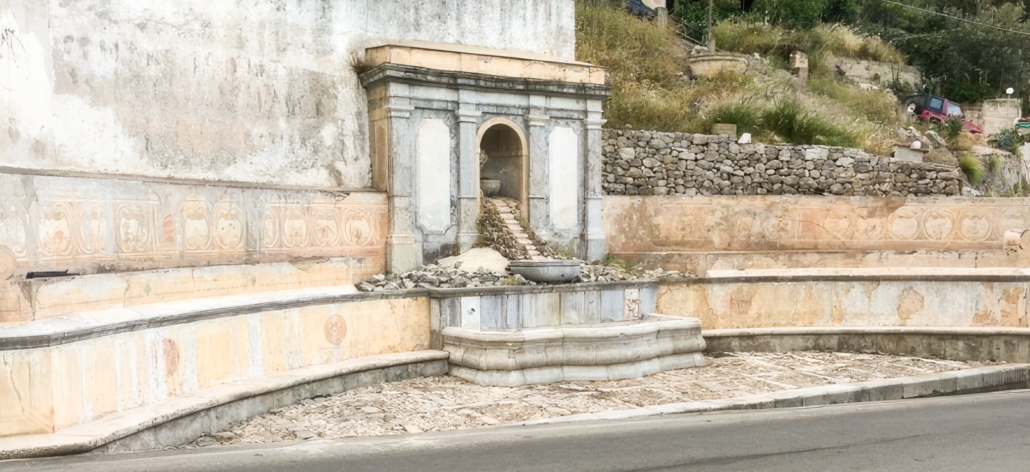
Going to Monreale, we witness the Hemicycle Fountain, nestled in the mountain and composed by a central aedicule in which is inserted an artistic composition from which the water descend into another basin embellished by friezes. The fountain is flanked by a hemicycle bench with faded decorations.
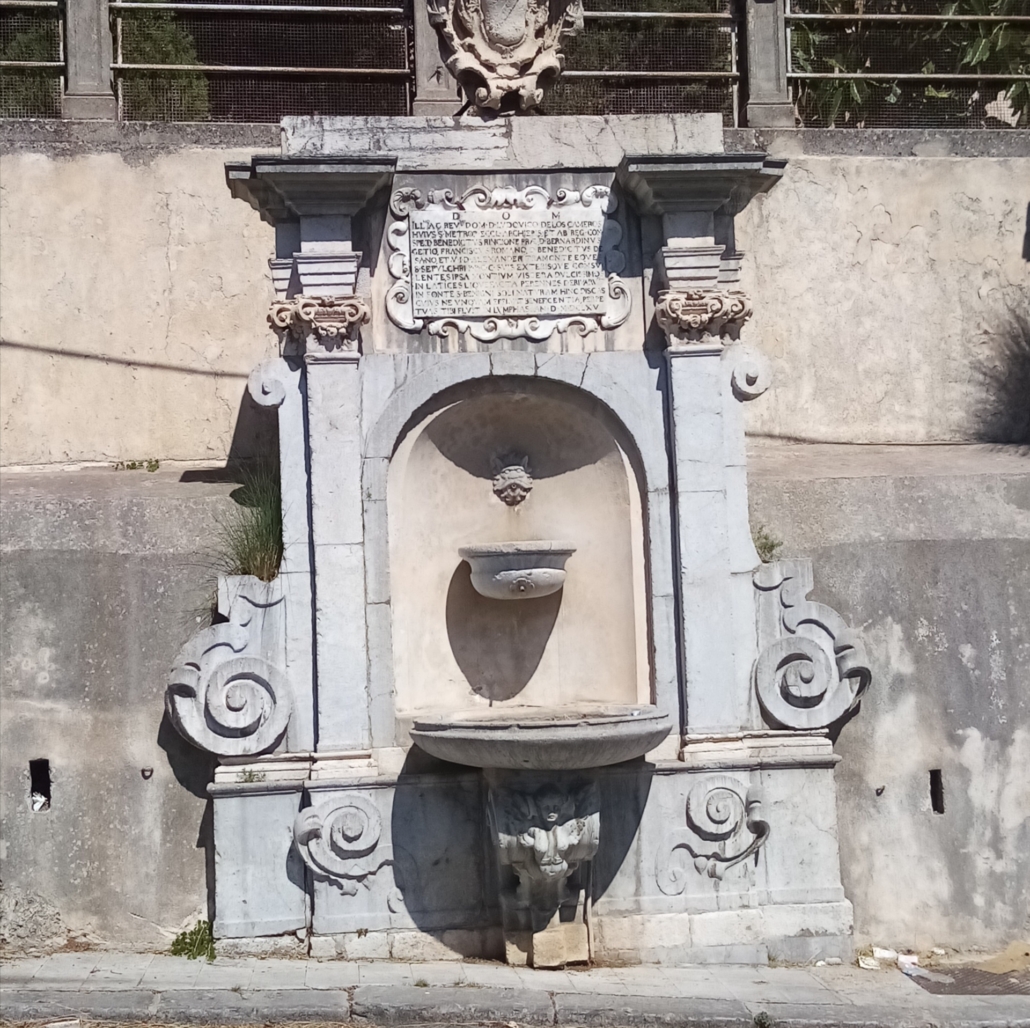
Before arriving to the main square on the right, we can see the Harpy’s Fountain dating back to 1656, enclosed in a niche on which a plaque with three coats of arms is placed. The fountain takes its name from a harpy frontally sculpted, spreading its wings in the inferior part, used as a support of the small basin.
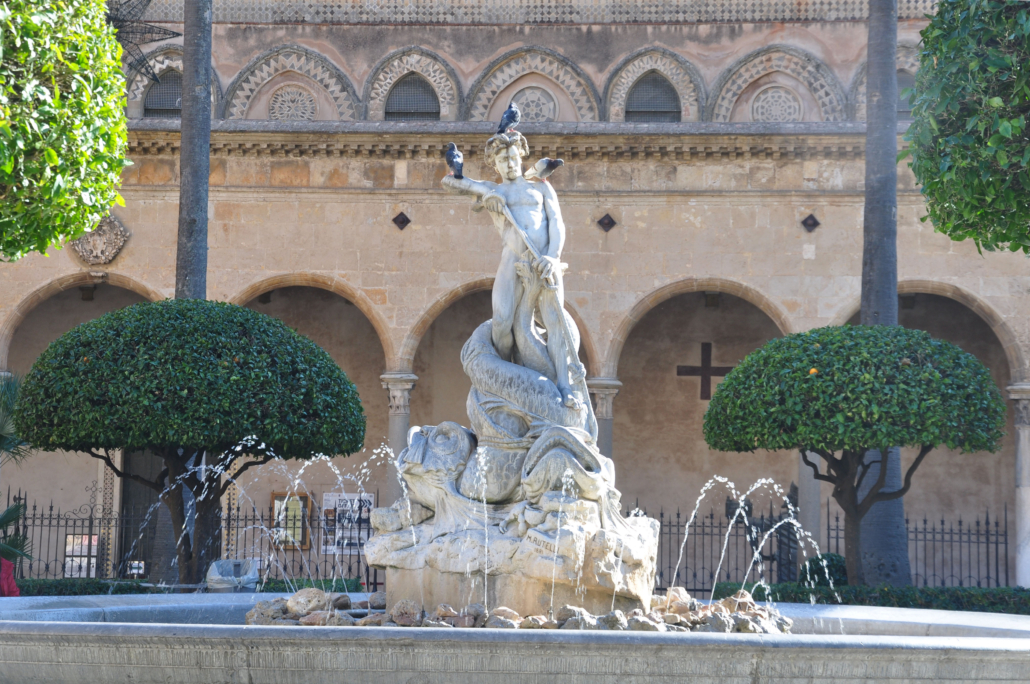
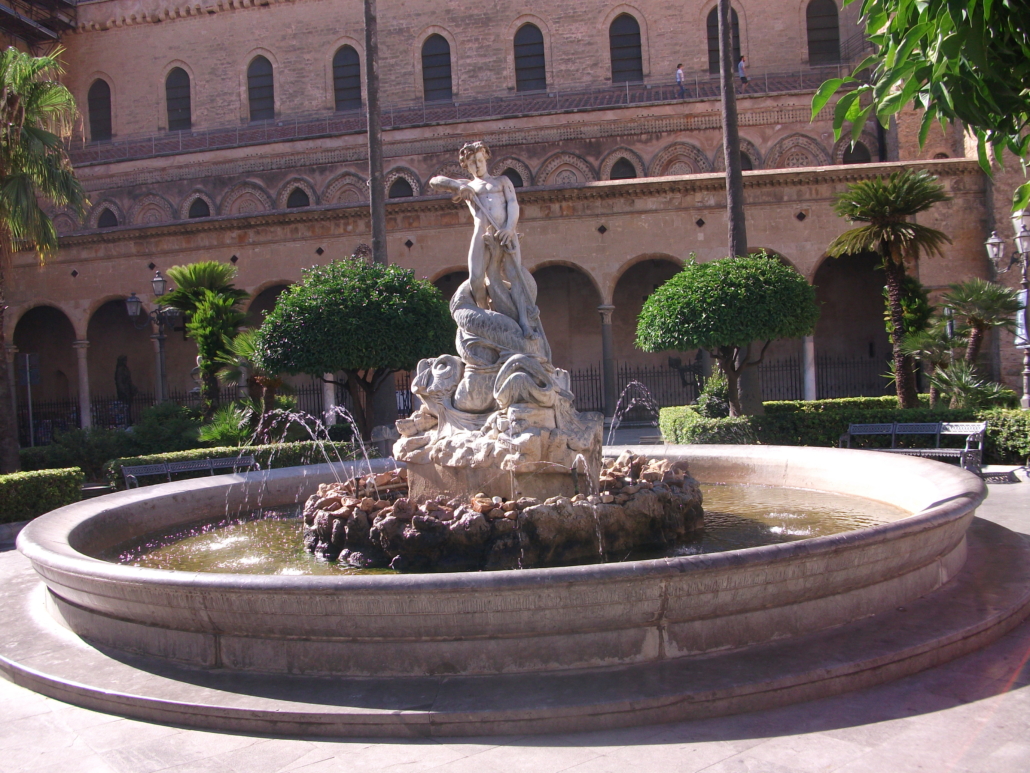
At the center of Piazza Vittorio Emanuele is located the Triton Fountain. Round-shaped, it has a marble basin and at its center is placed a sculpture by Mario Rutelli dating back to 1881: it’s a man, the “Triton” standing on a group of rocks, defeating 2 furious sea dragons emerging from the waters.
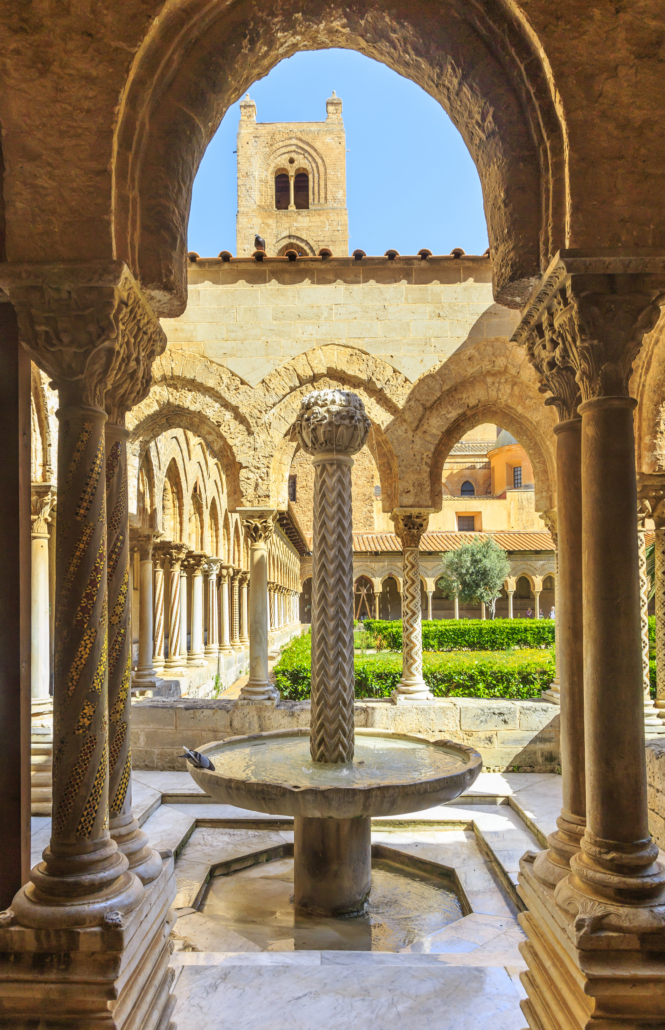
Inside the Benedictine Cloister, in a square space delimitated by arches, we can see the Cloister’s Fountain or King’s Fountain, because, according to a popular legend, king William the Second himself came here to quench his thirst. It has a Moresque style, raised off the ground and it’s consists of a wide circular basin: at its center a stylised palm stem raises, holding a spherical bud where human and leonine faces alternate between large leaves from which water gushes.
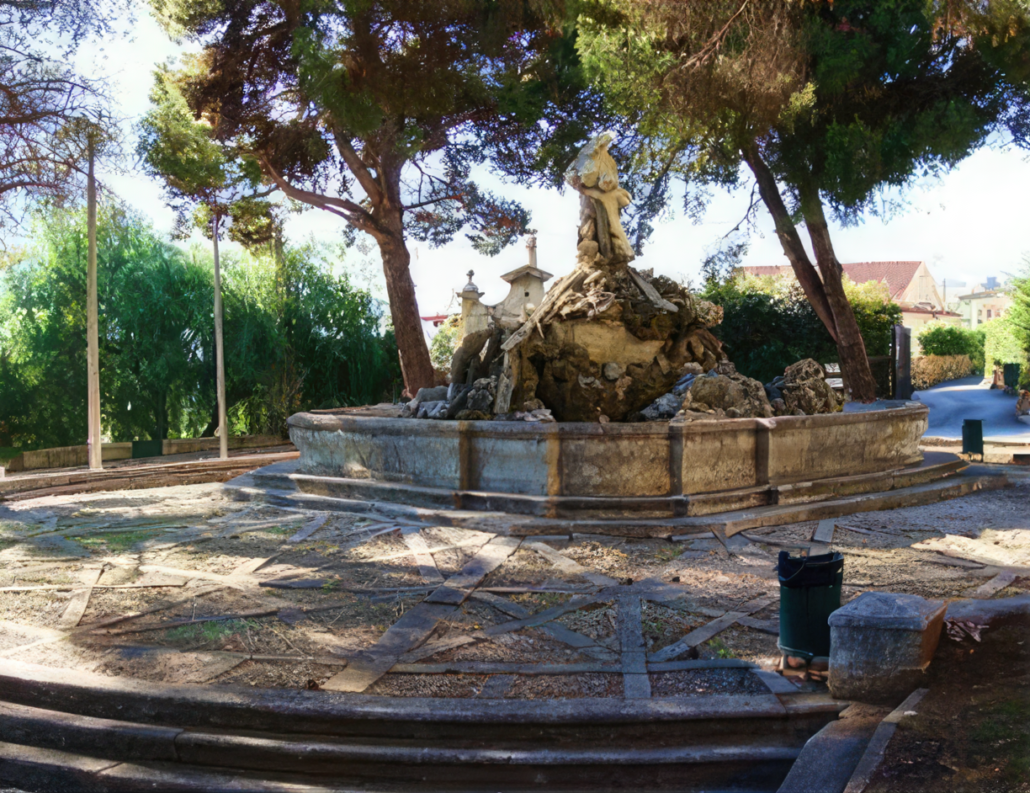
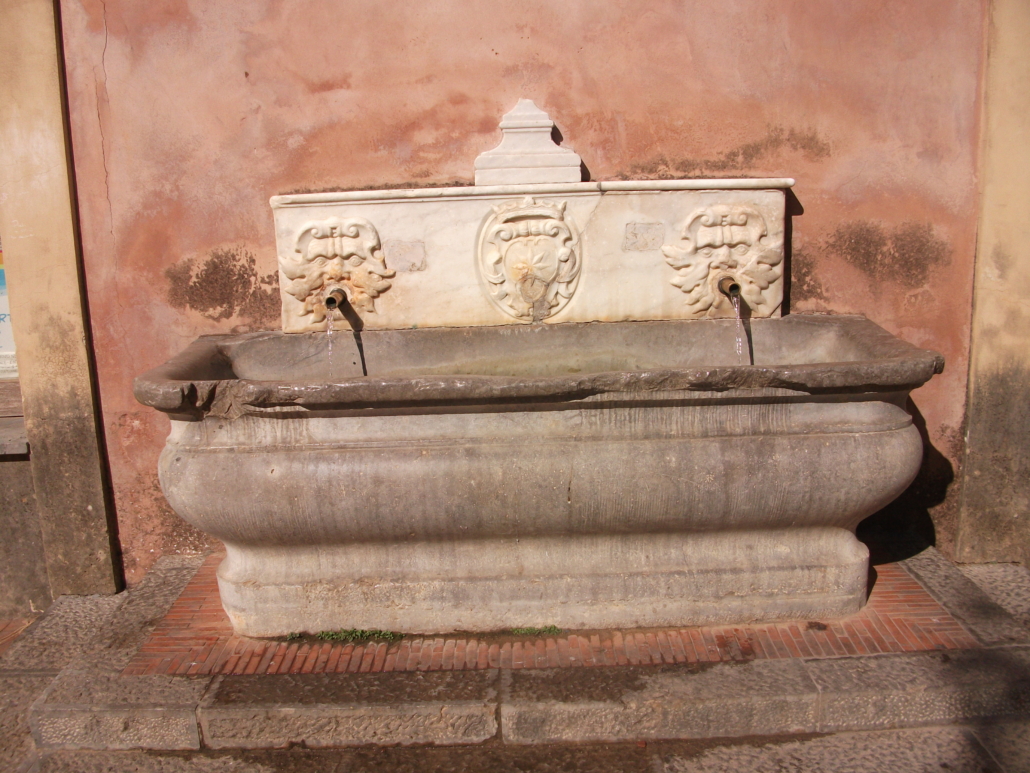




The “Antivilla’s Fountain” is located inside the Monumental Complex William the II, attached to a wall of the Old Boarding School Guglielmo commonly known as “Antivilla”. Apparently, It was realized using materials of an preexisting ancient Roman sarcophage; in the superior part two half man-half animal heads are sculpted, at the center there is the seal of the Church of Monreale.
The Fountain of Belvedere is located at the center of Belvedere’s Villa, one of the most beautiful destinations of all Sicily, part of the Monumental Complex of the Dome and so called thanks to its breathtaking panorama of the Conca d’Oro that we can enjoy from its terrace.
This fountain is located a few steps from the impressive foliage of a secular Ficus macrophylla; it was built during the Fascist period, with a unique block of reinforced cement and grit. Demolished during the 70s, the original fountain was replaced by the current one, more modern and round-shaped.
The Collegiata’s Fountain is located inside the Carrubbella neighborhood: built during the administration of the Archbishop Girolamo Venero in the 17th century, it has a rectangular basin. Anciently, above the fountain, there was an old tombstone.
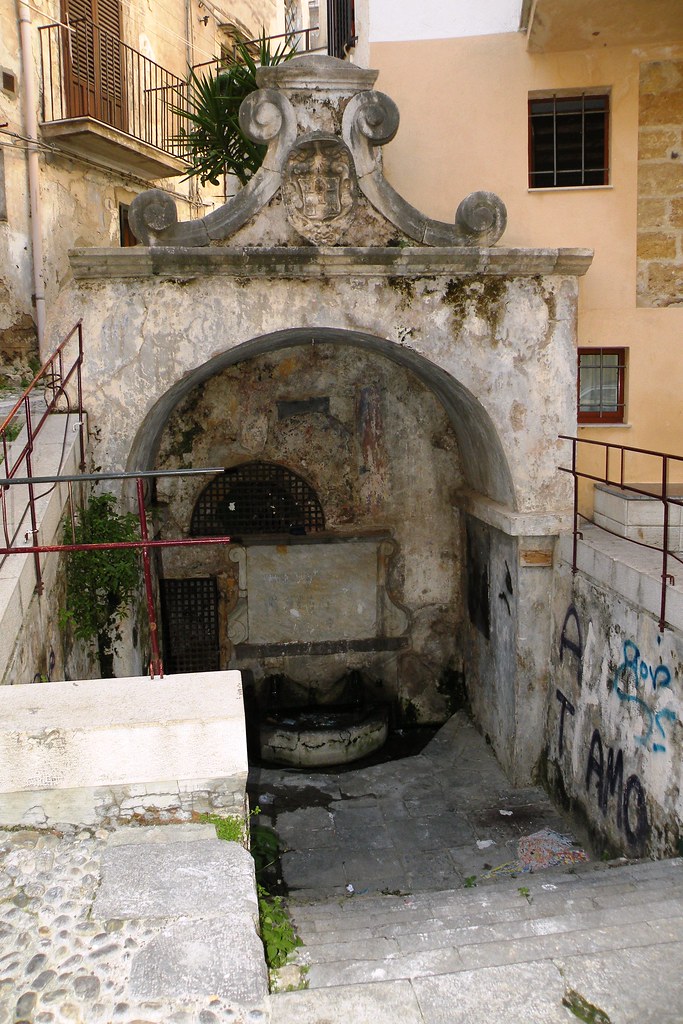
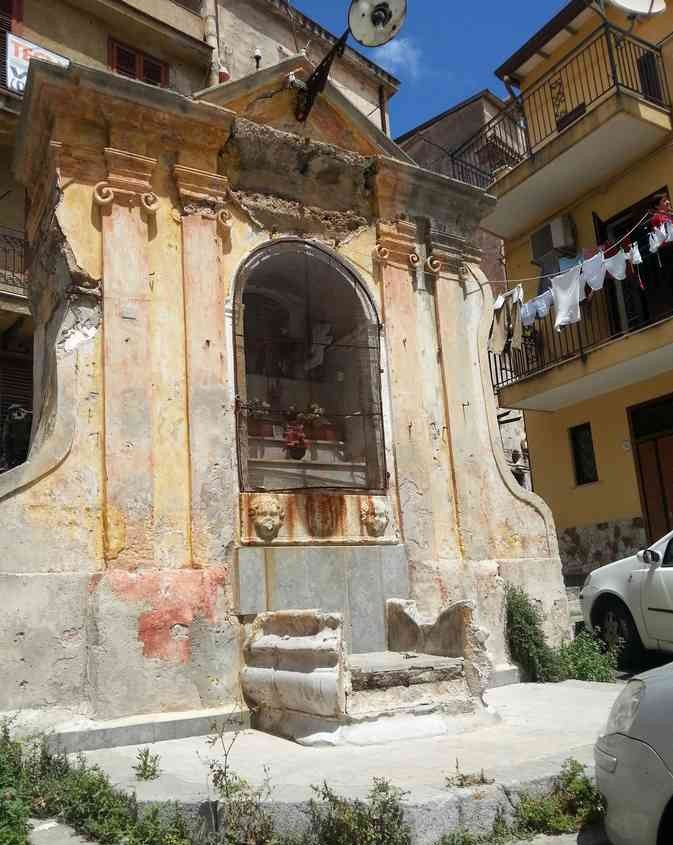
In the Pozzillo neighbourhood we find the Pozzillo’s Fountain. In Sicilian it’s called “U Puzziddu”, “the small well”, so called because it was located underneath the street level.
Built in 1630, its upper part is shaped like a dome made out of marble.
In the niche below, a bunch of steps lead to a small semicircle basin where the water that comes out of the mouth of two bas-relief putto heads flows. Above the dome there is an archiepiscopal coat of arms.
The Orange’s Fountain is located in the heart of Matteotti Square, better known by the name of “Orange Square” due to the presence back in the days of a small orange grove.
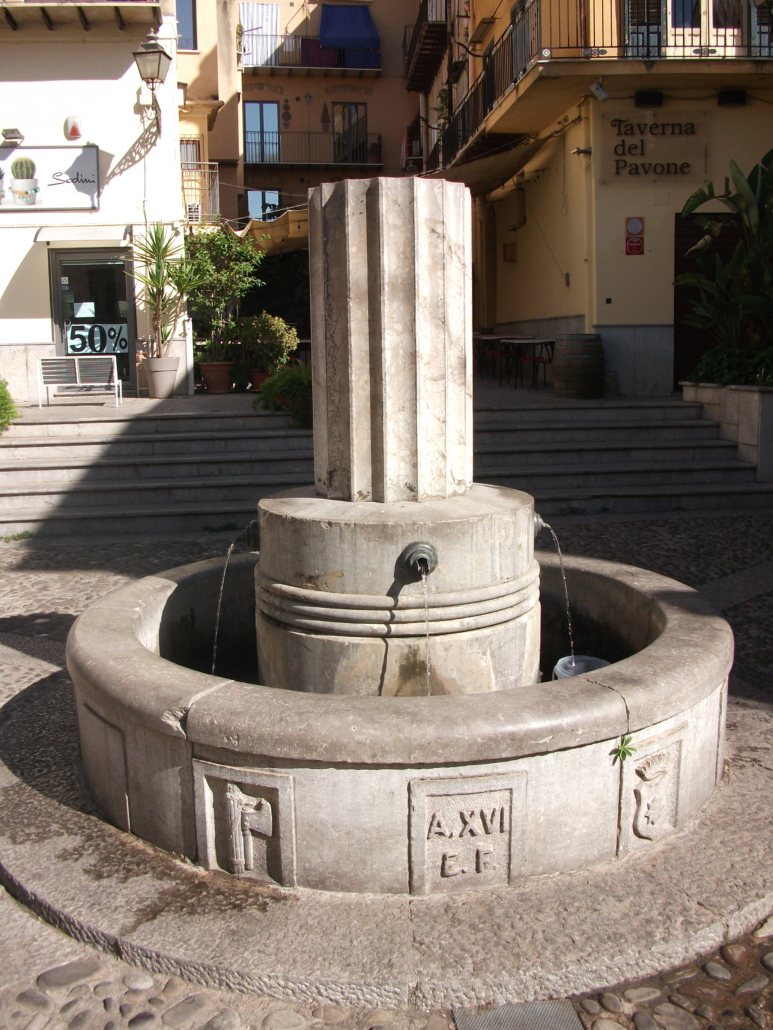
The fountain was built during the Fascist period and has a very simple structure: it’s in grey marble, it has a circular basin in the center of which stands a fluted column without capital reminding the Doric style. The emblem of the Municipality of Monreale is sculpted on the basin.
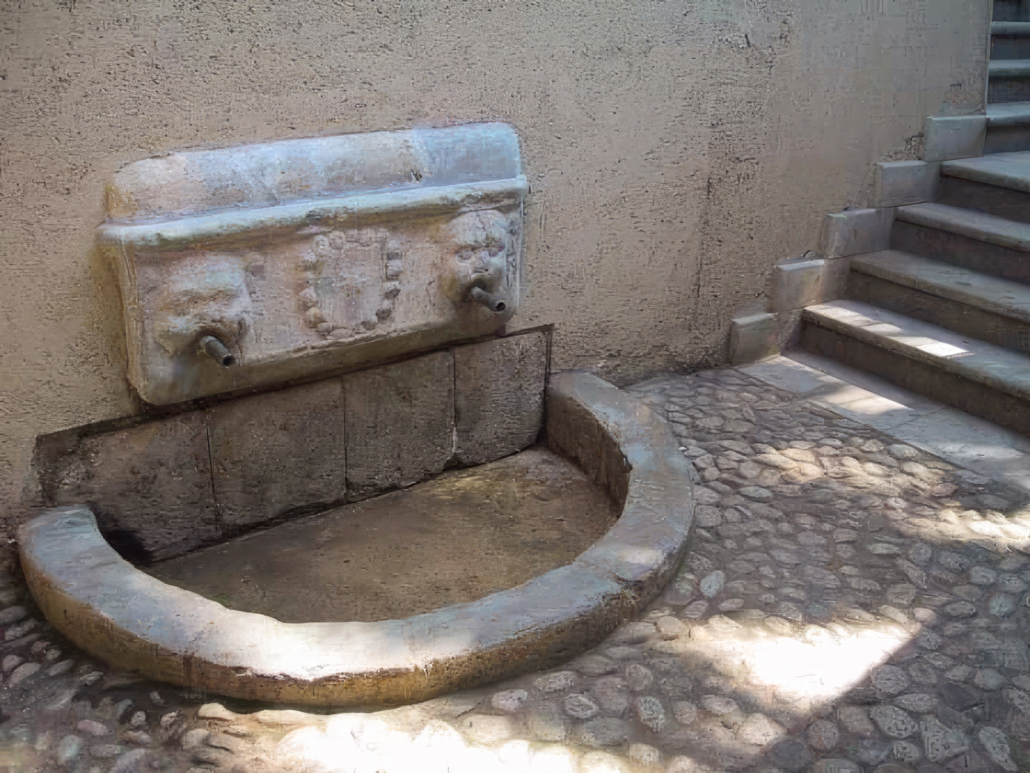
In Ludwig Torres Street, attached to the walls of the current Monumental Complex of the Cathedral of Monreale, is located the Fountain of Torres Street, which hadn’t been pouring water for many many years. It consists of a semicircular basin made out of stone.
The Fountain of New Waters, built during the second half of the 18th century at the behest of the Archbishop Testa, was the most important fountain in the higher part of the city, where spring water did not exist and water had to be carried using an ingenious system of hydraulic engineering.
The Channel’s Fountain was once located inside the large farm of the Benedictine nuns, which extended all the way up to the countryside. It was often used as public laundry.
In Carmine Street a fountain that the inhabitants call “The Carmine’s Fountain”, dating back to 1620, still stands today: it has a concave marble basin, it’s supported by a pedestal and at the top there is still a plaque illustrating the date of its construction.
The Fountain of Spasimo is located in the homonymous zone, whose name is due to its ancient use for the execution of death sentences. It dates back to 1660, just like the city walls which were built at the behest of the Archbishop Venero to protect the city. The fountain is characterized by a unique and modest basin of semicircular shape leaning against the wall. The basin is topped by two marble plaques above which three finely carved coats of arms are located.
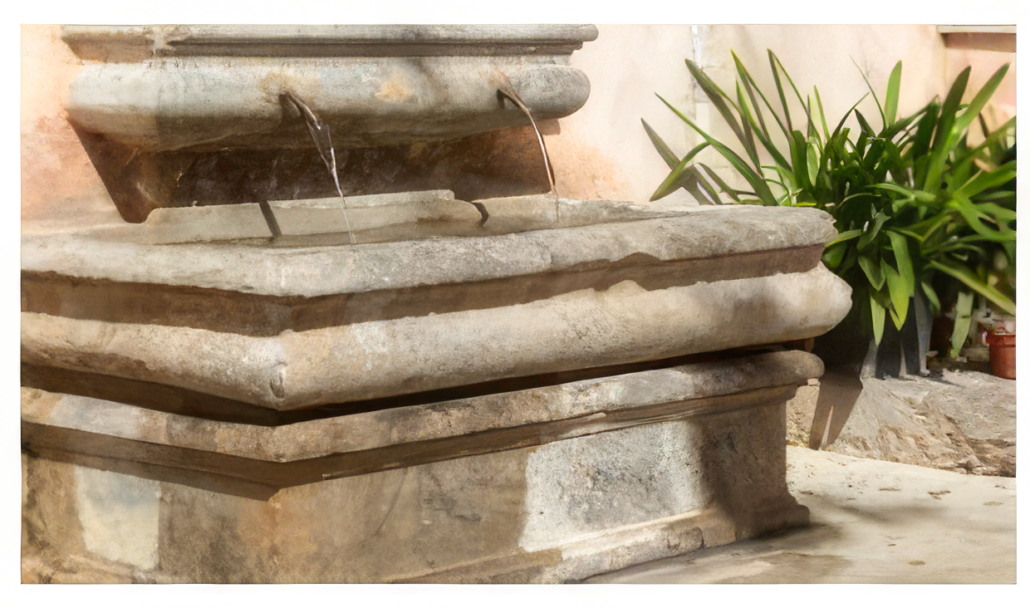
Just outside Monreale, towards Pioppo, we find the Fountain of Abbiviratura: built during the Fascist period, it was used as a drinking trough for animals. It has a very simple style, presenting a pentagonal wall from which through two tubes in steel, water flows down within a single tube below.
During the celebration of the Holy Crucifix, this fountain marks the farthest spot of the Procession which starts to the Collegiata’s Church, towards the countryside.
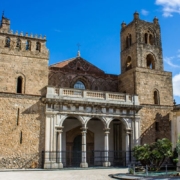
The Dome of Monreale is an architectural marvel of Romanesque-Latin-Norman-Byzantine style: it is simple, majestic and severe. It shows off a great profusion of wealth, with mosaics on a gold background surrounding the internal of the Dome for more than six thousand square meters…
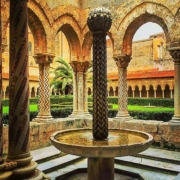
The Benedictine Cloister was part of the monastery and is one of the most important cloisters of all the Mediterranean area. It’s the heart of the entire Abbey Complex and It is a wonderful example of Byzantine architecture in Sicily…
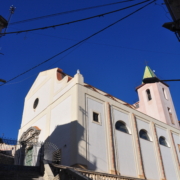
At the end of the 16th century, in Monreale’s neighbourhoods citizens started building many churches and chapels in order to express their religious devotion and show their charitable commitment to God, emphasizing their sense of brotherhood. Those buildings use the Baroque architectural canons…
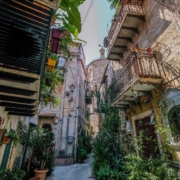
In the Historia della chiesa di Monreale, published in 1596 by the archbishop Ludovico II Torres (written using the pseudonym of Gian Luigi Lello) , we find out that Monreale was divided into four parts. The first and most ancient, the Pozzillo, took its name from the flowing water…
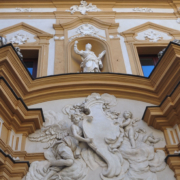
The first core of the library “Santa Maria La Nuova” dates back to the arrival of the monks who received many privileges from king William: among other things, the abbot was elevated to the rank of archbishop and the abbey had “libris et sacris vestibus argento et auro”…